
Quick Answer
R-410A is phasing out. What Wesley Chapel homeowners pay for leak searches now, and the $5,000 repair-or-replace rule.
Start here before you book service
- ✓ Existing R-410A systems can still be serviced and recharged, so a working unit does not need a panic replacement.
- ✓ Use the $5,000 rule: multiply your AC's age by the repair cost, and if it tops $5,000, replacement usually wins.
- ✓ Refrigerant-related repairs like a leak search and recharge often run $800 to $1,500, well above the $353 average.
- ✓ Run the numbers before peak summer to avoid emergency pricing on scarce equipment.
Sounds like you need a tech?
(813) 395-2324That familiar hum from your air conditioner is now the sound of a ticking clock. A global environmental mandate, designed to phase out potent greenhouse gases, is colliding with the reality of millions of aging cooling systems.
The result isn't just a future concern, it's a present-day financial squeeze for homeowners. The refrigerant that keeps your home cool is becoming scarcer and more expensive, turning routine repairs into major financial decisions.
For anyone in Wesley Chapel relying on their AC through a Florida summer, understanding this shift is the difference between a planned upgrade and a panicked, costly emergency.
Key statistics on the refrigerant phase-out
The data reveals a market under intense pressure. From skyrocketing prices for new refrigerants to the staggering environmental impact of old ones, the numbers explain why your repair bill is climbing and why the industry is at a crossroads.
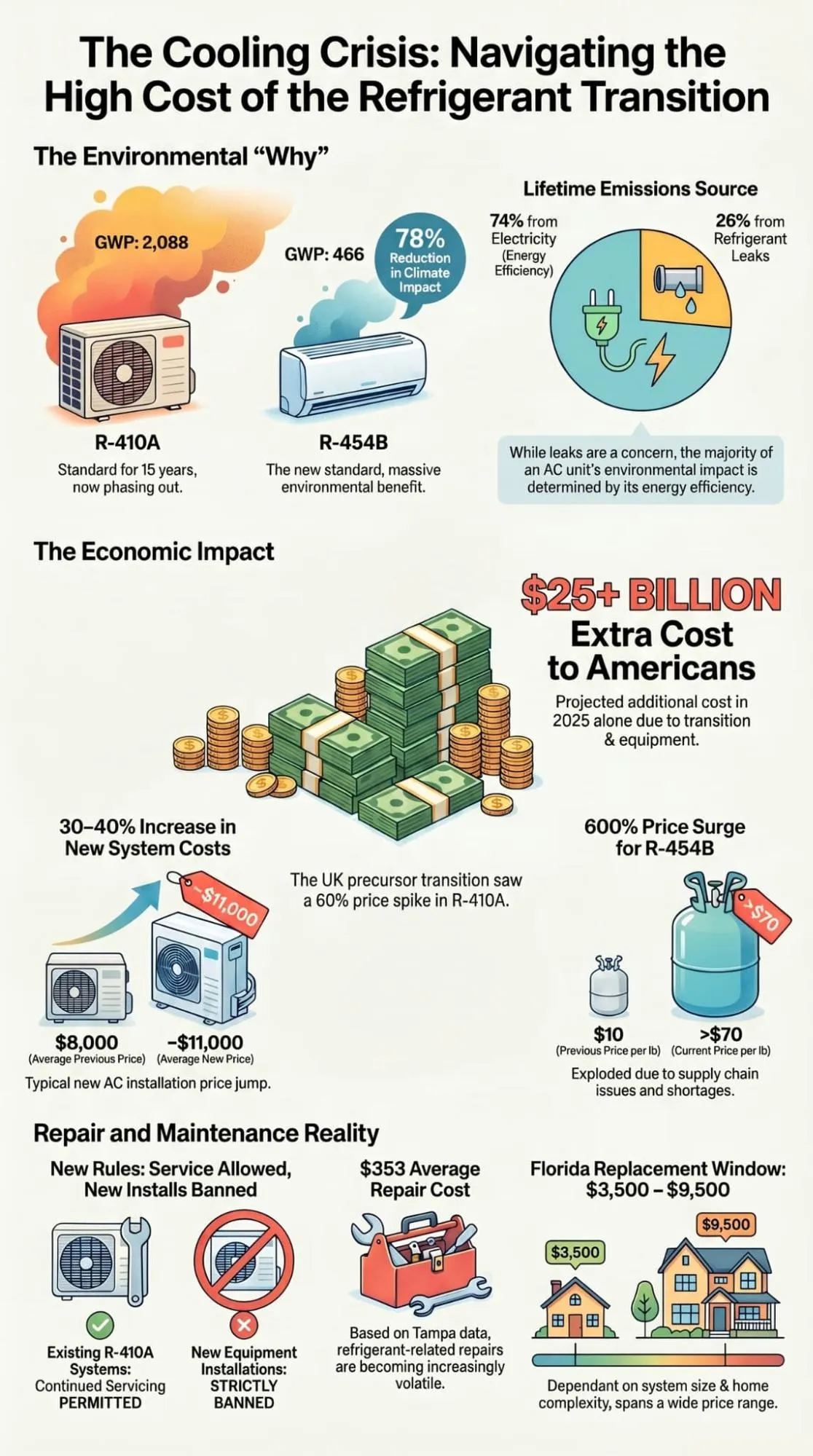
- 2,088 GWP (General Gas) – R-410A, the refrigerant in most ACs installed in the last 15 years, has a Global Warming Potential 2,088 times greater than carbon dioxide, driving its regulatory phase-down.
- 78% reduction (466 vs. 2,088 GWP) (Midea HVAC) – Its primary replacement, R-454B, has a GWP of about 466, representing a 78% reduction in climate impact, but it requires new equipment and handling procedures.
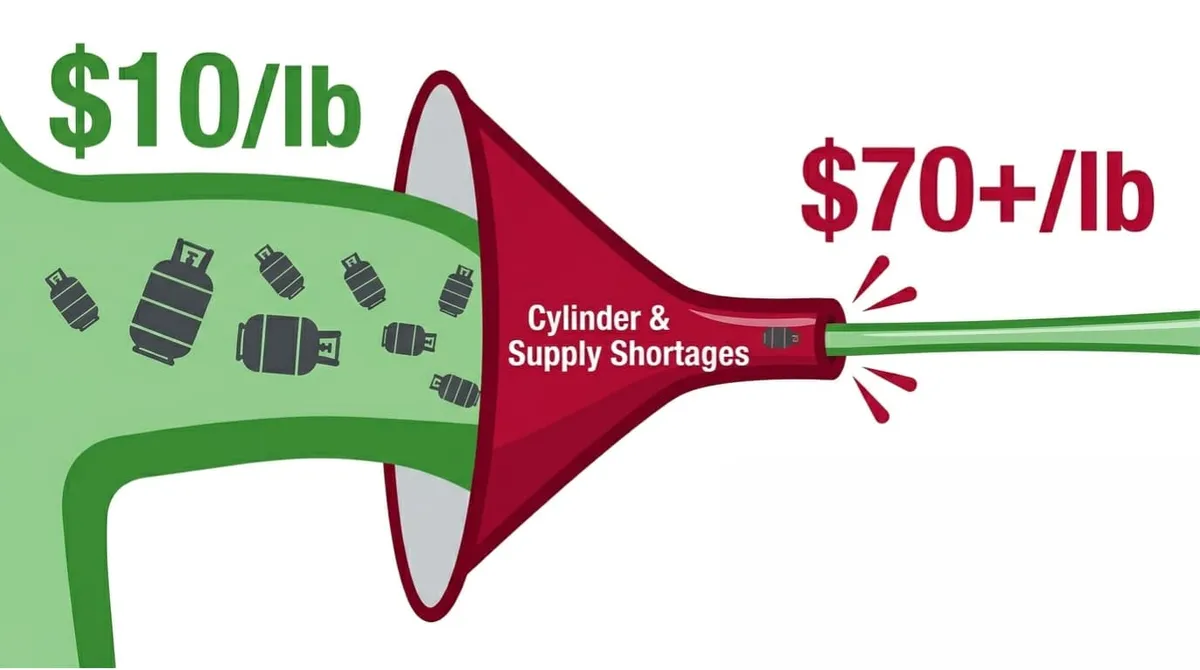
- $10 to $70+ per pound (EPA Technology Transitions) – The price of R-454B exploded from around $10 to over $70 per pound due to severe cylinder shortages and supply chain issues, highlighting transition pains.
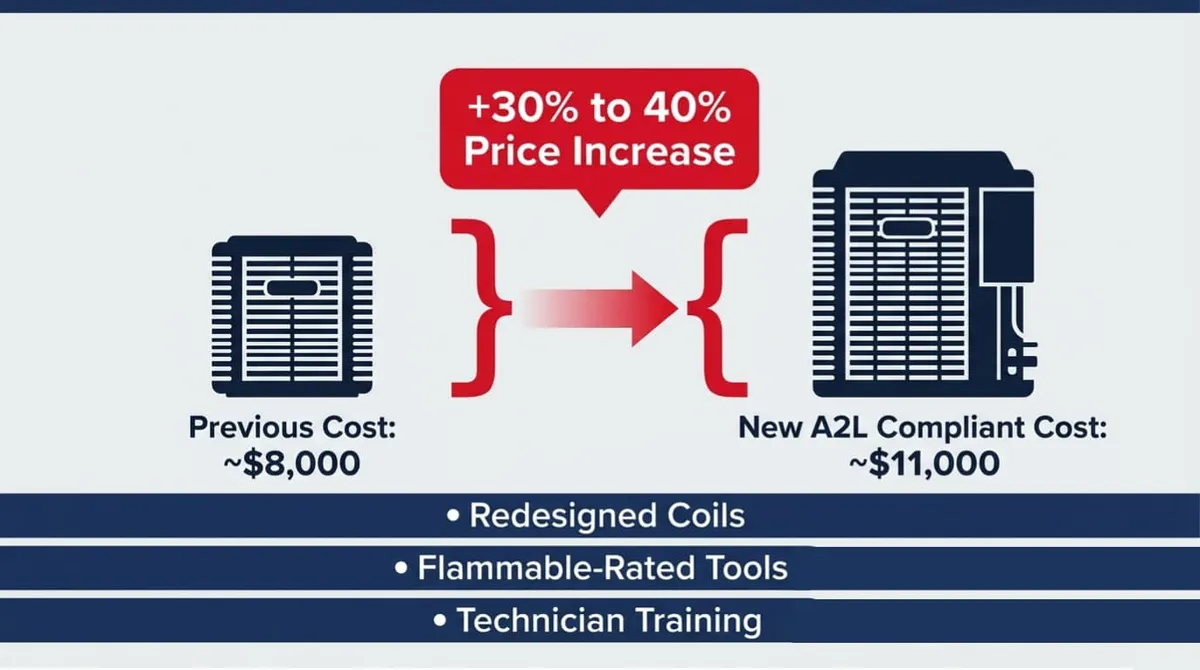
- 30-40% increase ($8,000 to $11,000) (EPA) – The cost of a new AC system jumped an estimated 30-40%, turning an $8,000 installation into an $11,000 project due to new technology and compliance costs.
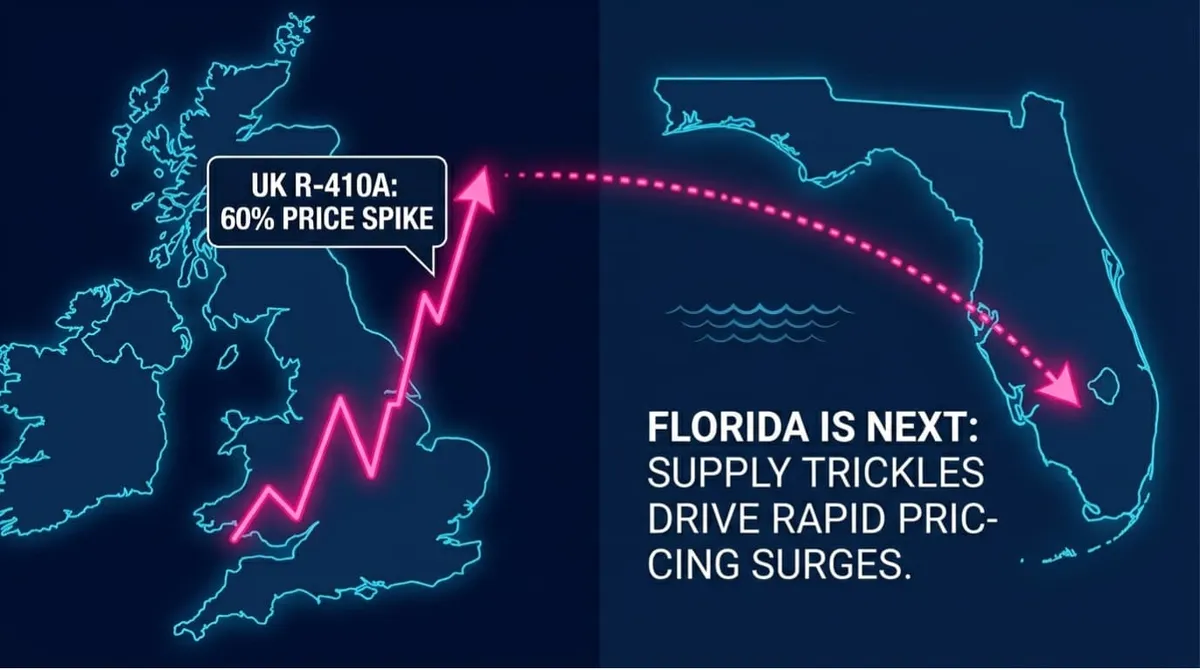
- 60% price increase (China International Capital Corporation) – Following policy adjustments, the UK market saw the price of R-410A spike 60%, a precursor to the volatility expected in the US as supplies dwindle.
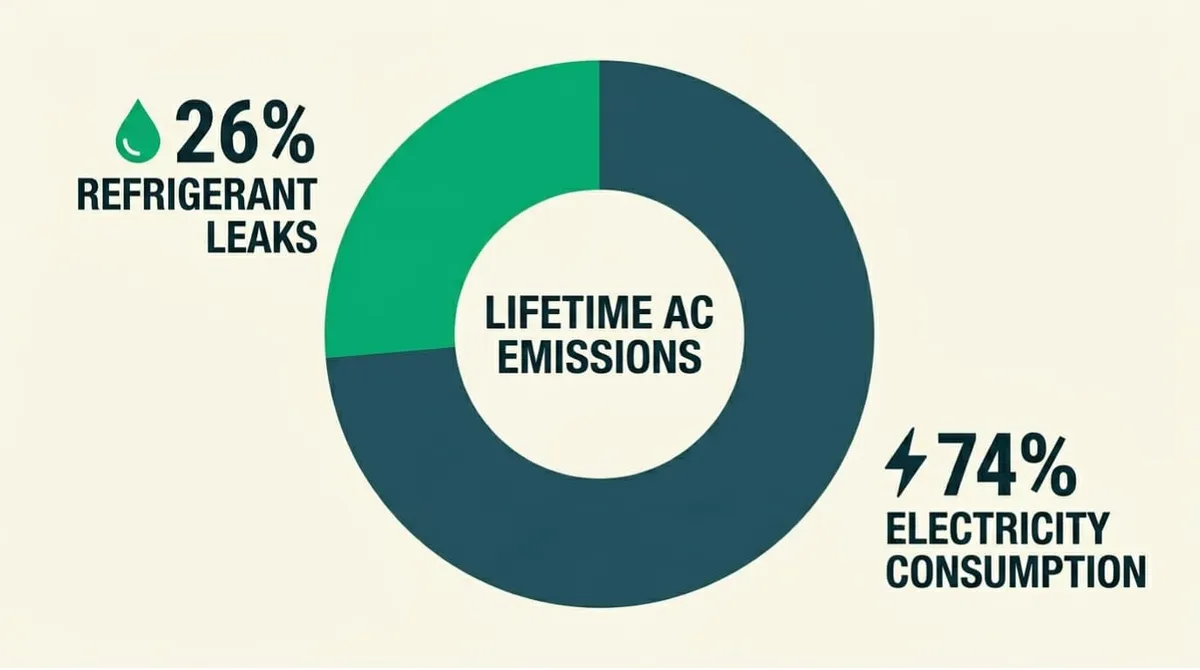
- 74% from electricity, 26% from refrigerants (Our World in Data) – While refrigerant leaks are a concern, 74% of an AC's lifetime emissions come from the electricity it uses, making system efficiency a critical factor.
- $353 average repair cost (Angi) – The average HVAC repair in the Tampa area runs about $353, but this figure is increasingly volatile for repairs involving refrigerants.
- $3,500 to $9,500 (Florida HVAC industry data) – A complete AC replacement in Florida typically ranges from $3,500 to $9,500, a wide window based on system size, efficiency, and home complexity.
- $25+ billion (EPA) – Americans were projected to pay an extra $25 billion for air conditioning in 2025 alone due to the combined effects of the refrigerant transition and related equipment costs.
- Service permitted; new installations banned (Midea HVAC) – A crucial clarification: the EPA rules allow continued servicing of existing R-410A systems, but ban new installations of equipment using it, protecting current homeowners while guiding the market forward.
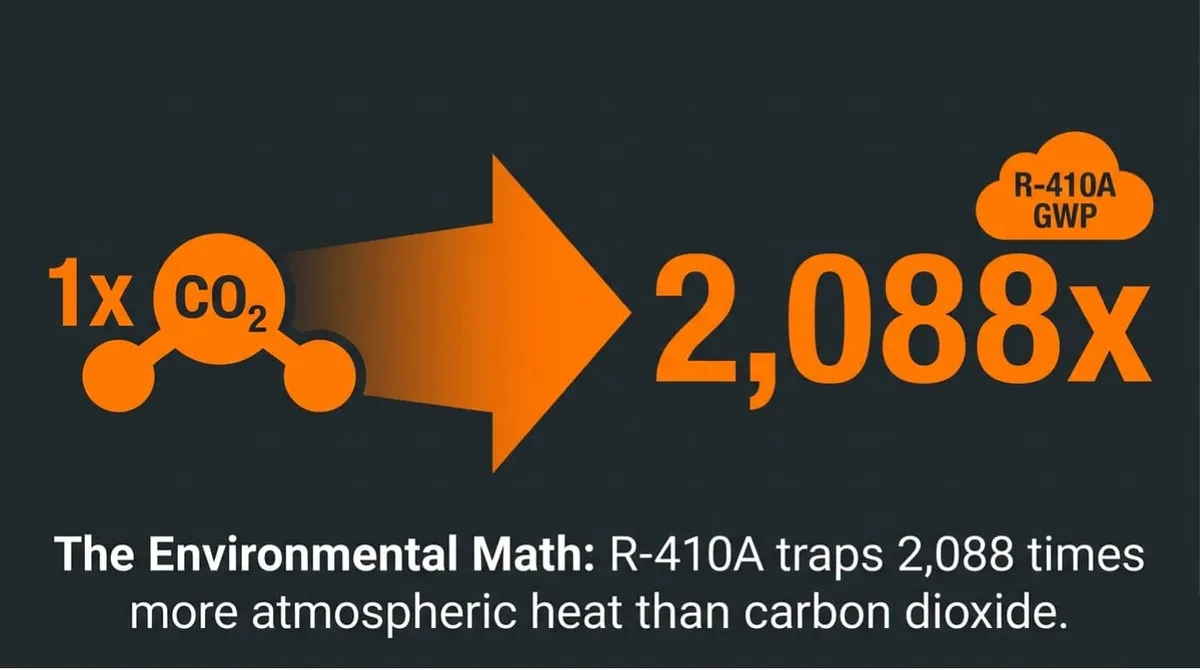
2,088 times: why R-410A's staggering GWP sealed its fate
According to General Gas, R-410A carries a Global Warming Potential (GWP) of 2,088, making it one of the primary targets of global refrigerant phase-down initiatives.
It's the reason your AC repair costs are changing. GWP is a measure of how much heat a gas traps in the atmosphere compared to carbon dioxide. R-410A, the workhorse refrigerant for a generation of air conditioners, is phenomenally effective at cooling your home but also at warming the planet if it escapes.
Environmental math became unavoidable. Regulators worldwide looked at the millions of pounds of this gas in homes and businesses and saw a climate problem waiting to leak out. The phase-out was never about the refrigerant failing at its job, it was about the unintended consequence of its success.
Every pound of R-410A that a technician recovers during a repair is now part of a tightly controlled, shrinking pool. That scarcity, driven by its environmental impact, is the root cause of the price pressure you feel today.
78% reduction: how R-454B offers a cooler future (with new rules)
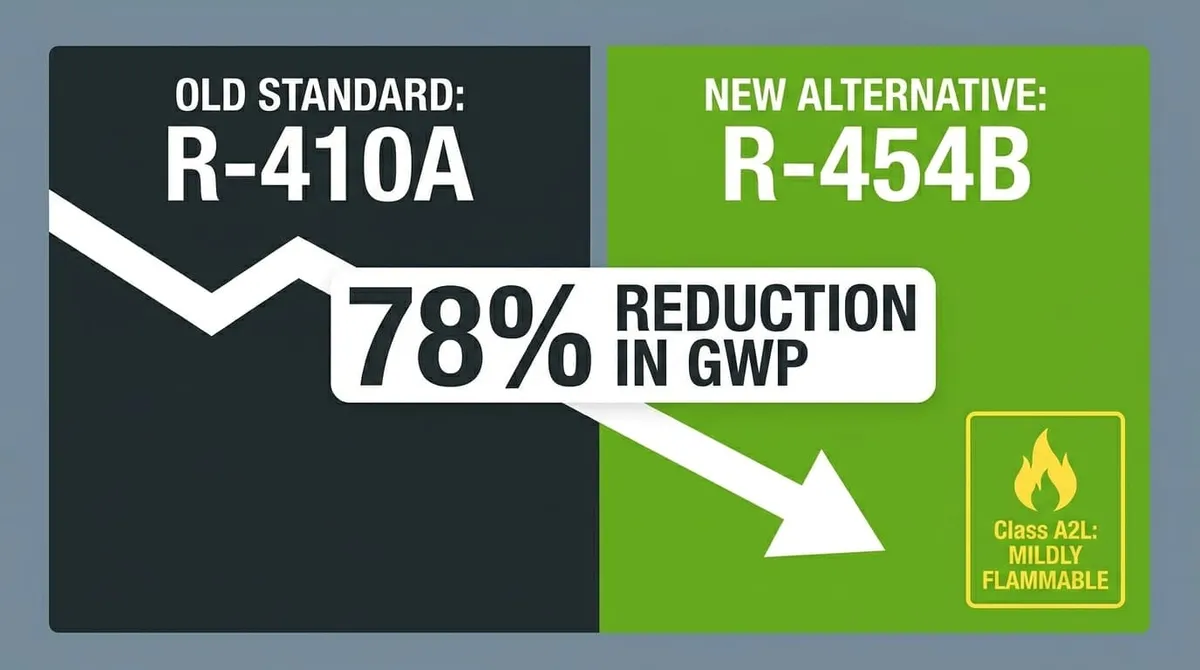
According to Midea HVAC, R-454B reduces global warming impact by approximately 78% compared to R-410A, which is why manufacturers have rapidly adopted it as a replacement refrigerant.
But there's a catch, it's classified as an A2L refrigerant, meaning it's mildly flammable. This changes everything for technicians. It requires special handling procedures, different tools, and updated training for safe installation and repair.
For you, the homeowner, it means any new system you install will use this refrigerant, and you must ensure your HVAC contractor is certified to work with it.
The benefit is a system with a much smaller environmental footprint. The trade-off is an industry in transition, grappling with new safety protocols and the supply issues that come with any major change.
$10 to $70+: the supply shock that made R-454B a rare commodity
According to data cited by EPA Technology Transitions, the price of R-454B surged from roughly $10 to more than $70 per pound as supply-chain disruptions and cylinder shortages constrained availability.
Manufacturers could produce the refrigerant, but they couldn't get it into the hands of contractors in the smaller quantities needed for residential service. This bottleneck created a classic supply crunch.
For HVAC companies, it meant scrambling to find inventory, paying premiums, and sometimes turning down jobs because they couldn't source the refrigerant. For homeowners considering a new system, it introduced uncertainty and delay.
It was a stark lesson that a regulatory transition depends on a thousand practical details, and when one link in that chain breaks, the whole system stutters. While prices have stabilized somewhat, the volatility revealed the fragility of the supply chain during a switchover.
30-40% increase: why a new AC system costs thousands more
According to the EPA, the refrigerant transition contributed to estimated system price increases of 30-40%, pushing some residential AC replacements from around $8,000 to approximately $11,000.
First, the equipment itself is new. Manufacturers had to redesign coils, compressors, and circuit boards to work safely with A2L refrigerants. Those research, development, and retooling costs are passed on.
Second, the installation process is more involved. Technicians need recovery machines rated for flammable refrigerants, they must perform additional leak checks, and the training itself has a cost.
Finally, the initial scarcity of both equipment and refrigerant created a classic supply-and-demand price hike. You're not just paying for a new box outside your home, you're paying for the entire industry's pivot to a new standard.
It's a one-time transition cost that will eventually normalize, but if you are buying during the switchover, you are paying it. If your system is still serviceable, a planned AC replacement on your own timeline almost always beats an emergency one.
| Cost driver | Impact on new system price | Impact on repair cost |
|---|---|---|
| Refrigerant price | Built into equipment cost | Direct, per-pound charge |
| Specialized tools | Included in installation quote | Amortized into service rates |
| Technician training | Factored into labor costs | Factored into diagnostic and repair rates |
| Regulatory compliance | Certification and permitting | Recovery and documentation procedures |
| Supply chain volatility | Limited inventory, higher MSRP | Parts delays, premium pricing |
60% price spike: what the UK's R-410A crisis signals for Florida
According to analysis from China International Capital Corporation, the UK experienced a roughly 60% increase in R-410A pricing following policy changes and supply uncertainty.
Distributors, unsure of future availability, raised prices to manage their remaining stock. This is a preview, not an anomaly. The US market is on a similar trajectory. As production of R-410A slows to a trickle, the remaining supply becomes more valuable.
For a homeowner in Wesley Chapel with a 12-year-old system, this means the cost of a simple recharge isn't just the labor, it's the increasingly precious gas itself. That repair you postponed last summer might cost significantly more this summer.
As Tim Hawk, a local master technician, observes, "We've never seen a price spike this fast on a refrigerant that's supposed to be 'on its way out.' The UK just saw 60%. We're next." It's a global market, and Florida is not insulated from its tremors. If you are weighing a recharge against an upgrade, our team can walk you through AC repair in Wesley Chapel and Tampa and lay out both numbers in writing.
74% vs. 26%: the real culprit behind your AC's carbon footprint
According to Our World in Data, approximately 74% of an air conditioner's lifetime emissions come from electricity consumption, while refrigerants account for the remaining 26%.
This statistic reframes the conversation. While the refrigerant phase-out grabs headlines, nearly three-quarters of your air conditioner's environmental impact comes from the electricity it guzzles. The older and less efficient your system, the harder it works, and the more coal or gas is burned to power it.
The 26% from refrigerant leaks is still significant, which is why the phase-out matters. But the 74% is a powerful argument for upgrading to a modern, high-efficiency system regardless of the refrigerant inside it.
A new high-SEER unit can cut your cooling electricity use by 20-30% or more. Our guide to SEER2 ratings in Florida breaks down what that efficiency actually saves. So, while you're navigating the refrigerant change, remember that the biggest win for your wallet and the planet is often a system that simply uses less power to do the same job.
$353: the deceptively simple average AC repair cost
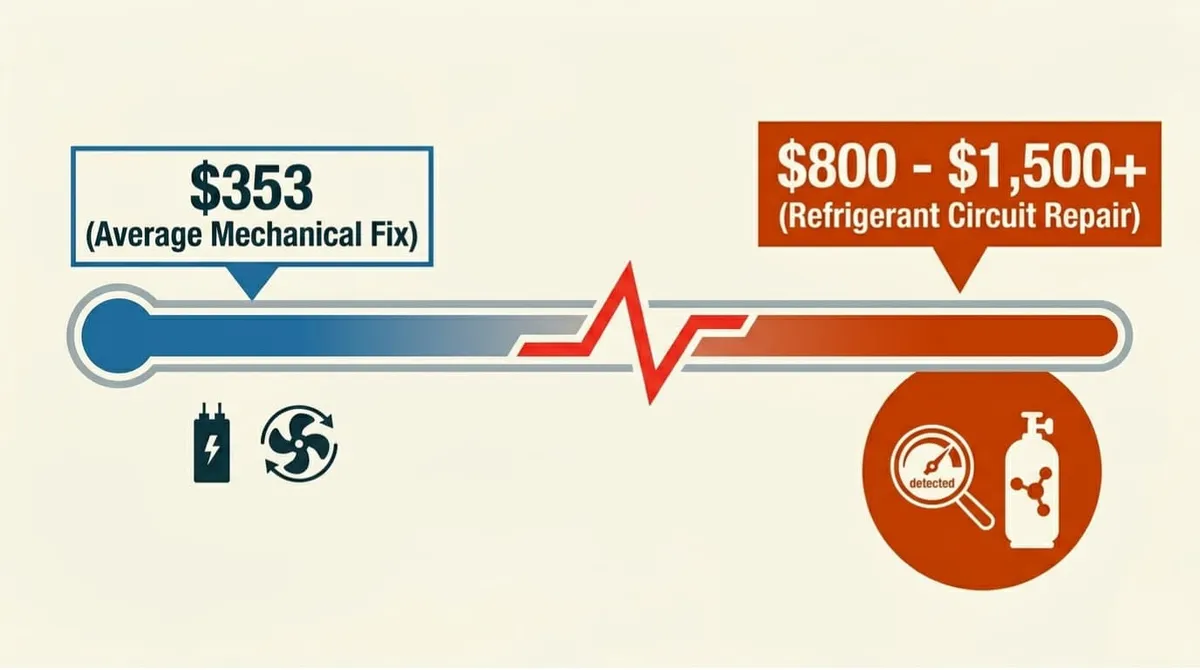
According to Angi's HVAC pricing data for the Tampa market, the average HVAC repair costs approximately $353, although refrigerant-related repairs frequently exceed that benchmark.
That average blends a $150 capacitor replacement with a $1,200 compressor burn-out repair. For a standard mechanical fix, like a contactor, a fan motor, or a clogged drain line, it's probably in the ballpark. But the moment your repair involves the refrigerant circuit, that average is useless.
A leak search, evacuation, and recharge with R-410A is a different financial universe. The costs can quickly push a bill into the $800 to $1,500 range, driven by:
- The diagnostic fee
- The labor to find and fix the leak
- The cost of the refrigerant itself
The $353 number tells you what common, minor repairs cost. The refrigerant phase-out is making the less common, major repairs dramatically more expensive. Routine AC maintenance is the cheapest way to catch a small leak before it becomes one of those big-ticket repairs.
$3,500 to $9,500: navigating the replacement cost maze
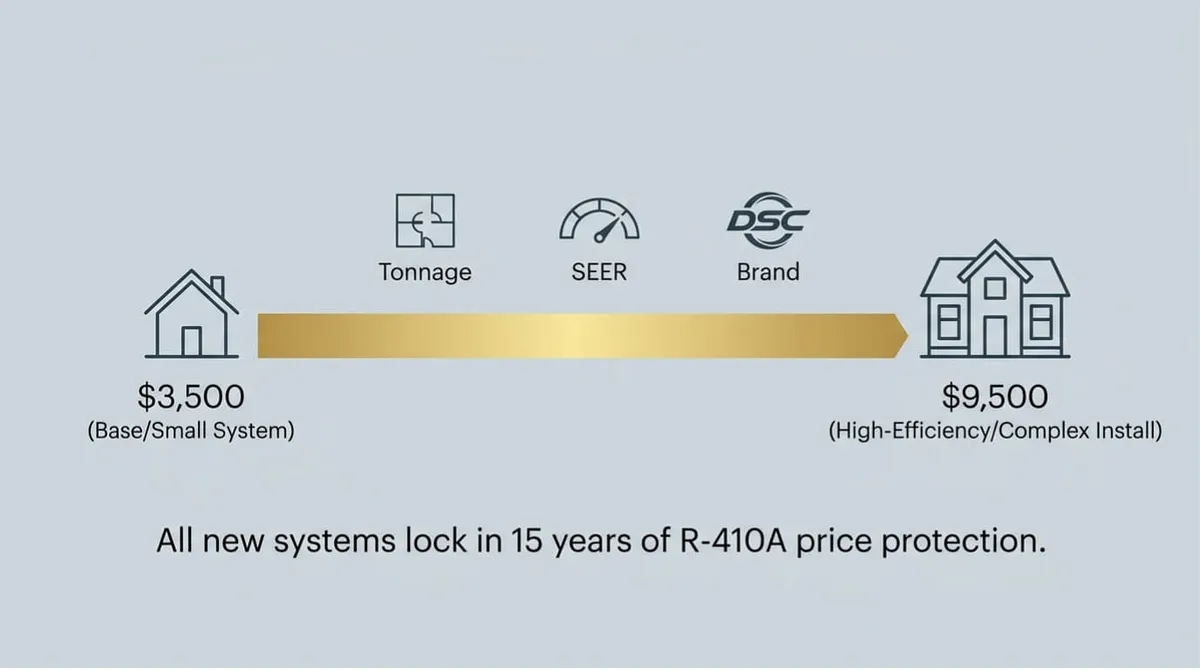
According to Florida HVAC industry pricing data, a complete AC replacement typically ranges from $3,500 to $9,500 depending on system size, efficiency rating, and installation complexity.
This wide range for a new AC unit in Florida reflects many variables: the size of your home (tonnage), the efficiency rating (SEER), the brand, and the complexity of the installation. A simple swap on an easily accessible pad will be at the lower end.
A system for a large home with difficult attic access or new ductwork will be at the higher end. The phase-out affects this cost because all new equipment now uses the next-generation refrigerant, which is part of that higher upfront price tag.
However, this investment also buys you freedom from the R-410A scarcity problem for the next 15 years. It's a classic pay-now-or-pay-later scenario. You pay a known, significant cost today to avoid a series of unknown, escalating repair costs tomorrow.
$25+ billion: the national sticker shock of the refrigerant transition
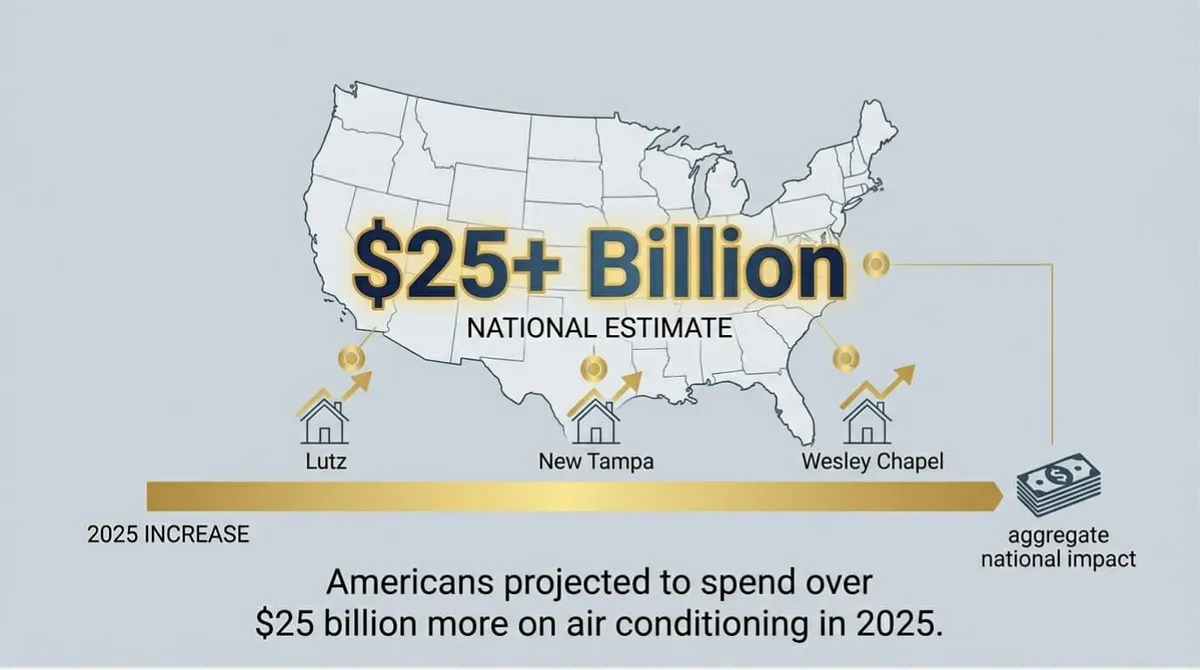
According to the EPA, Americans were projected to spend more than $25 billion in additional air-conditioning costs during 2025 due to refrigerant transition-related price increases and equipment changes. This massive sum is the result of millions of individual decisions, including:
- A family in Lutz replacing their system two years early because they're worried about refrigerant availability.
- An apartment complex in New Tampa paying a 50% premium for a rush delivery on a new chiller.
- The increased cost of every new construction home with a compliant AC system, baked into the mortgage.
This aggregate figure shows the transition's vast economic weight. It's not just a technical switch for engineers; it's a financial event for households and businesses.
For a homeowner, it underscores that you're not alone in facing higher costs. The entire country is navigating this shift, and the market prices reflect that collective pressure.
"Service permitted": the lifeline for your existing R-410A system
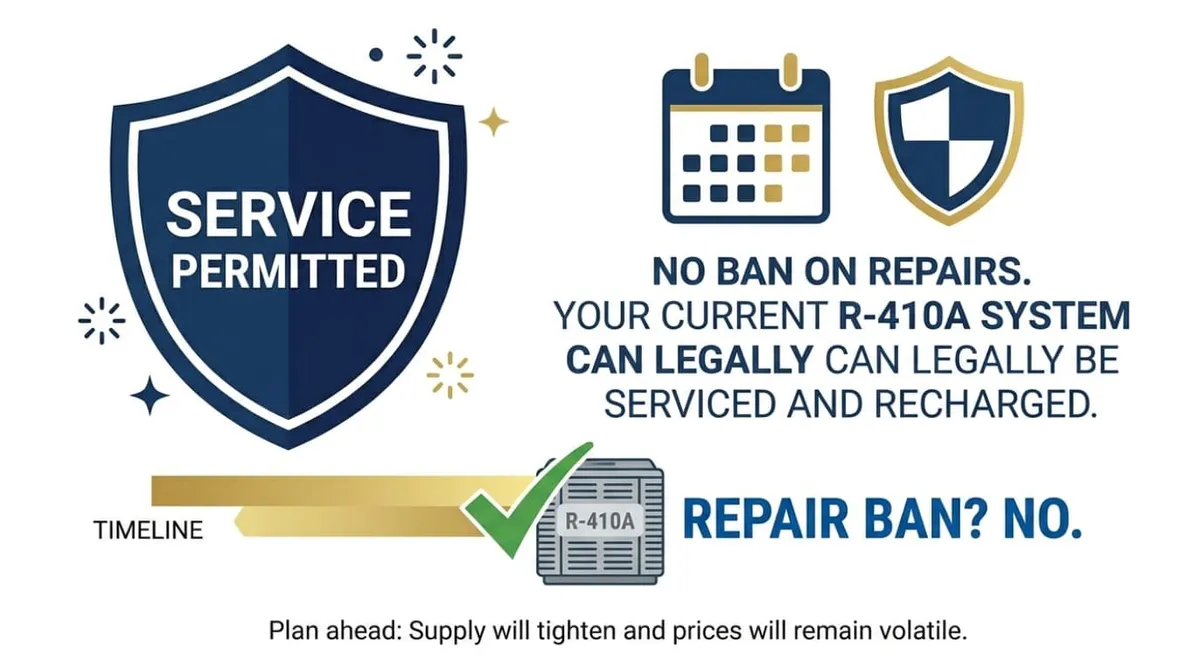
According to Midea HVAC's explanation of current EPA regulations, homeowners may continue servicing existing R-410A systems even though new installations using the refrigerant are no longer permitted.
It does not ban repairing your existing system. You can still get your current unit serviced, recharged, and fixed.
The refrigerant will still be available for years to come, albeit at higher and more volatile prices. This means you don't have to panic and replace a perfectly functional 8-year-old system.
You have time to plan. However, "service permitted" doesn't mean "service will be cheap or easy forever." It's a lifeline, not a long-term solution.
It allows you to manage the transition on your own schedule, but the economic incentives, rising repair costs versus the efficiency and stability of a new system, will increasingly push you toward replacement.
Planning ahead for long-term comfort and savings
The HVAC refrigerant transition is not a reason to rush into a replacement, but it is a reason to plan ahead. If your system is aging, understanding your repair costs, replacement options, and future efficiency savings can help you make a smarter long-term decision. The goal is not just restoring cool air today. It is investing in reliable comfort, lower operating costs, and peace of mind for years to come.
If you're considering your next step, the team at I Care Air Care can help you evaluate your options and choose a solution that fits your home, budget, and long-term comfort goals. Call (813) 395-2324 or schedule AC repair in Wesley Chapel today.
.webp "Tim Hawk, Owner of I Care Air Care")
Tim founded I Care Air Care in 2010 after 30+ years in the Tampa Bay HVAC trade. EPA Universal certified. The source for all technical guidance published on this site.
Read Tim's full profile →Related local help
These pages connect this guide to the services and local areas homeowners usually need next: