
Quick Answer
Wesley Chapel homeowners are moving toward AC replacement as federal savings shrink and Florida cooling costs rise.
Start here before you book service
- ✓ Florida's residential electricity rate hit 15.86 cents/kWh in February 2026, up 8% in a year (EIA).
- ✓ The average Florida household now spends nearly $2,300 a year on electricity.
- ✓ Replacing a SEER 10 system with SEER 16 can cut cooling energy use by over 35%.
- ✓ Federal tax credits are phasing down after 2026, making this a use-it-or-lose-it window.
Sounds like you need a tech?
(813) 395-2324A combination of rising electricity prices and shifting federal incentives is creating a narrow window of opportunity for homeowners to replace aging air conditioners. In Wesley Chapel and throughout the Tampa Bay area, cooling is a near year-round necessity because of Florida's long summers and high humidity.
For families here, understanding this "quiet crash" is key to avoiding higher bills and missed savings. This guide breaks down the data and explains why acting in 2026 could be the most financially sound decision.
Key statistics on AC incentives and Florida energy costs
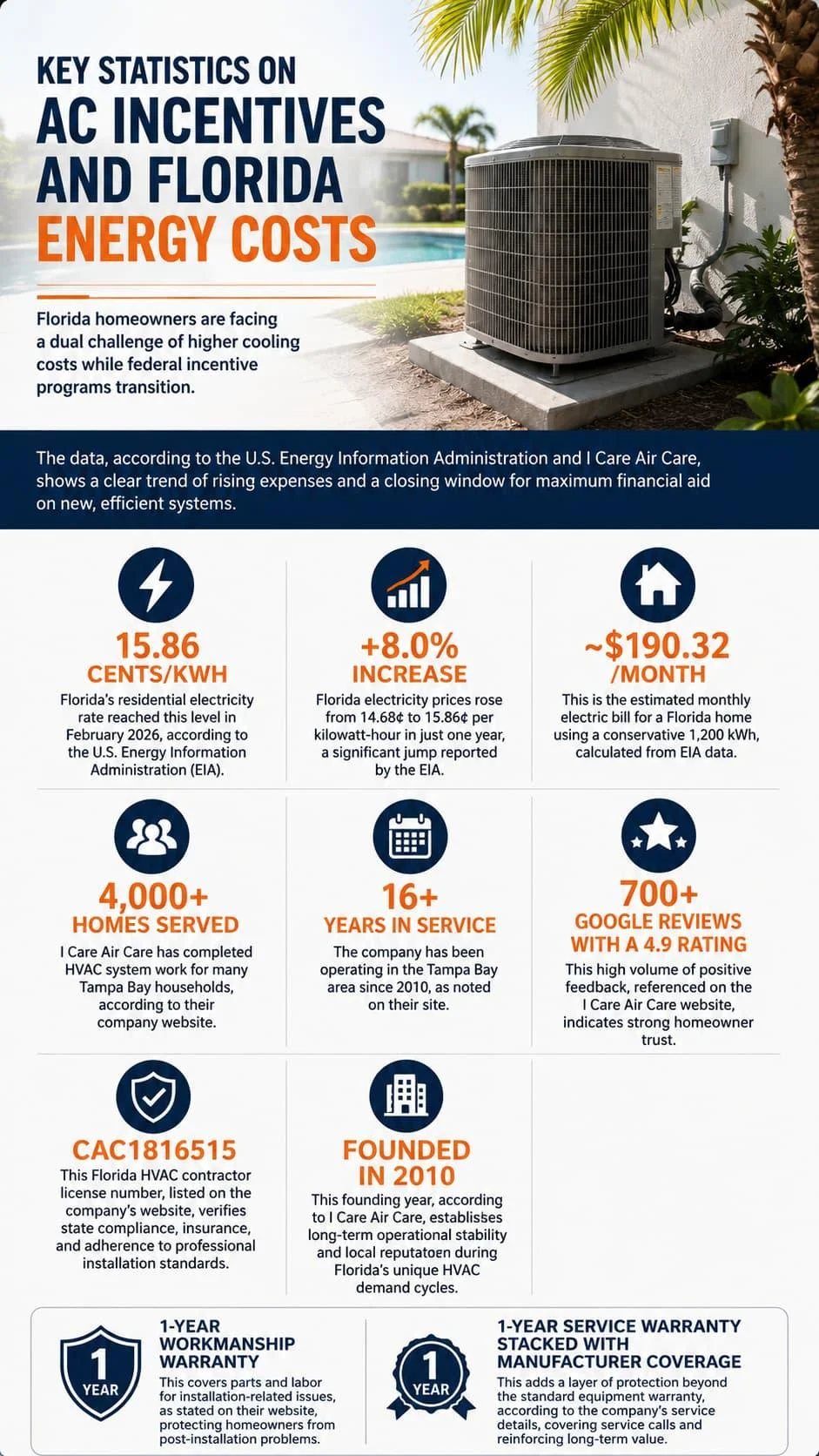
Florida homeowners face a dual challenge of higher cooling costs while federal incentive programs transition. Data from the U.S. Energy Information Administration, combined with local HVAC trends we observe at I Care Air Care, shows rising expenses and a closing window for maximum financial aid on new, efficient systems.
- 15.86 cents/kWh - Florida's residential electricity rate in February 2026 (U.S. Energy Information Administration), directly increasing the cost to run any inefficient air conditioner.
- +8.0% increase - Florida electricity prices rose from 14.68 to 15.86 cents per kWh in just one year (EIA), accelerating the payback period for an efficiency upgrade.
- ~$190.32/month - The estimated monthly electric bill for a Florida home using a conservative 1,200 kWh, calculated from EIA data.
- 4,000+ homes served - I Care Air Care has completed HVAC work for thousands of Tampa Bay households.
- 16+ years in service - The company has operated in the Tampa Bay area since 2010, navigating multiple cycles of incentive changes and climate demands.
- 700+ Google reviews, 4.9-star average - A high volume of positive feedback, a critical trust signal when choosing a contractor for a major investment.
- License CAC1816515 - Our Florida HVAC contractor license, verifying state compliance, insurance, and professional installation standards.
- 1-year workmanship warranty - Covers parts and labor for installation-related issues, on top of manufacturer coverage.
Why Florida's 15.86 cents/kWh electricity rate matters for AC owners
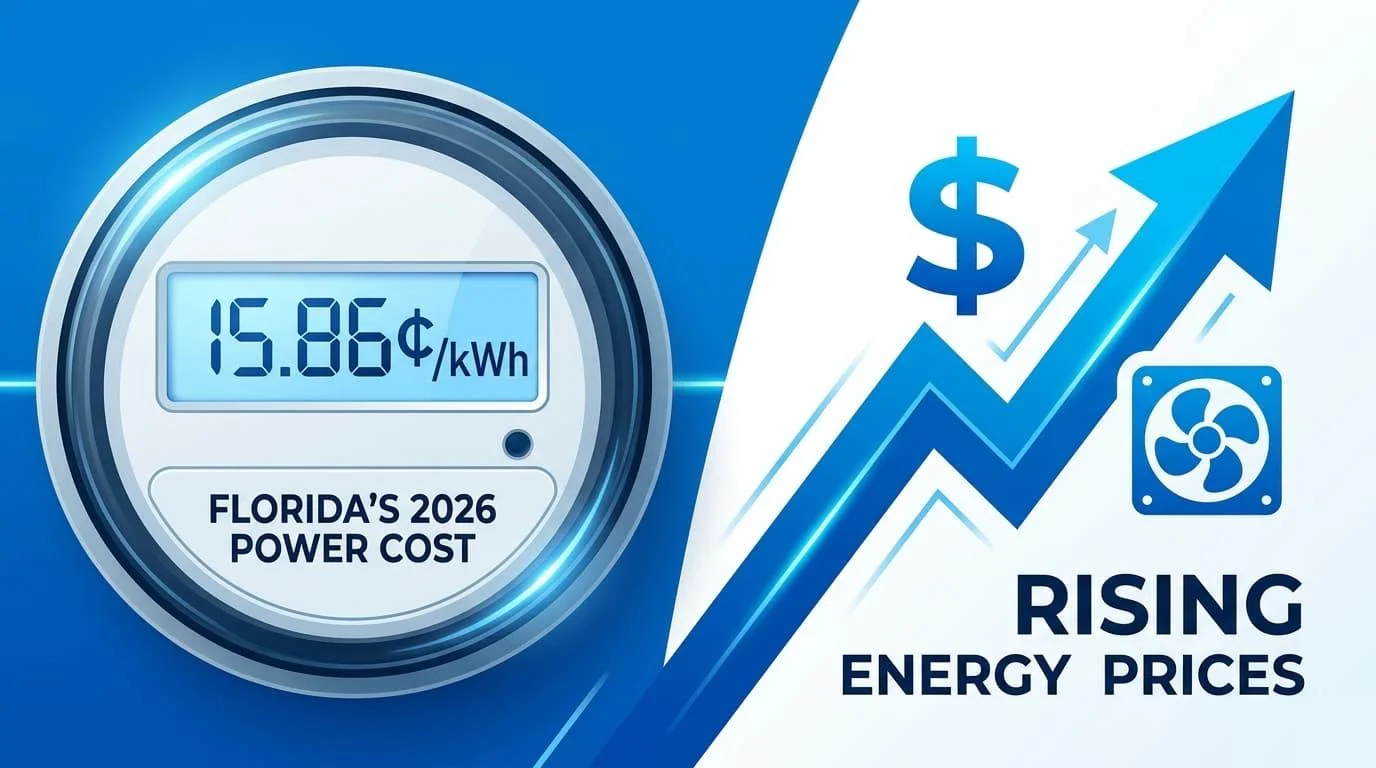
15.86 cents per kilowatt-hour, according to U.S. Energy Information Administration data for February 2026, is more than a number, it's the direct operating cost for every hour an air conditioner runs. For a homeowner with an older, low-SEER unit running 8 to 10 hours a day in the summer, this rate translates to hundreds of dollars in monthly cooling costs.
The higher the rate, the greater the financial return on investing in a high-efficiency system. A modern AC with a SEER rating of 16 or higher uses significantly less electricity to deliver the same cooling, making the higher upfront cost easier to justify as utility rates climb. The equation is straightforward: inefficient systems become luxury items in a high-rate environment.
Florida's 8% electricity rate increase explained
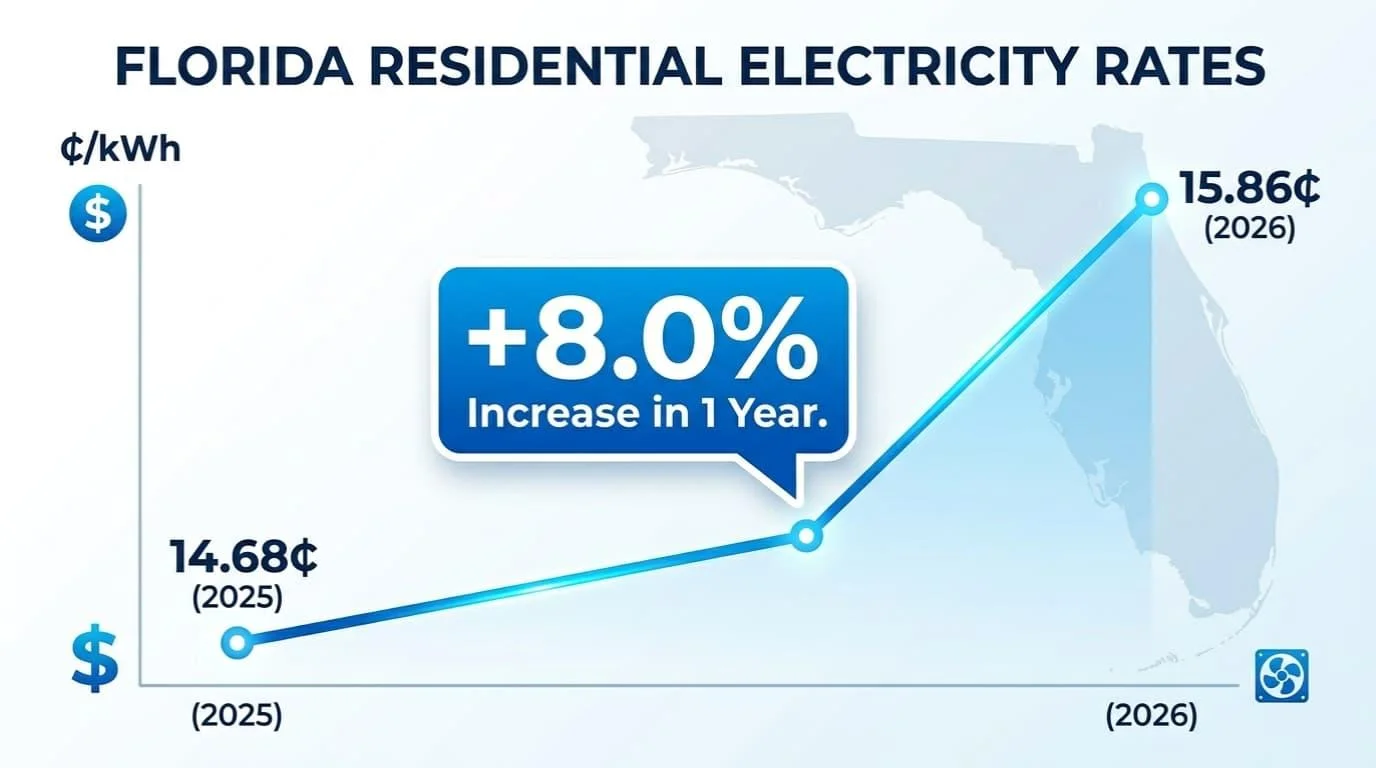
The jump from 14.68 to 15.86 cents per kWh in one year, as reported by the EIA, is driven by several interconnected factors. Florida's continued population growth increases overall demand on the power grid, especially during peak summer hours. The cost of natural gas, a primary fuel for electricity generation, remains volatile, and investments in grid hardening and storm resilience after severe weather also contribute to rising base rates.
For homeowners, this trend is not an anomaly, it's a likely direction for the future. Each percentage increase widens the operating-cost gap between an old AC and a new one, financially punishing procrastination.
| Year | Average residential rate | Monthly cost at 1,200 kWh | Annual cost |
|---|---|---|---|
| 2025 | 14.68 cents/kWh | ~$176.16 | ~$2,113.92 |
| 2026 | 15.86 cents/kWh | ~$190.32 | ~$2,283.84 |
The average Florida electric bill: why it's near $190 per month
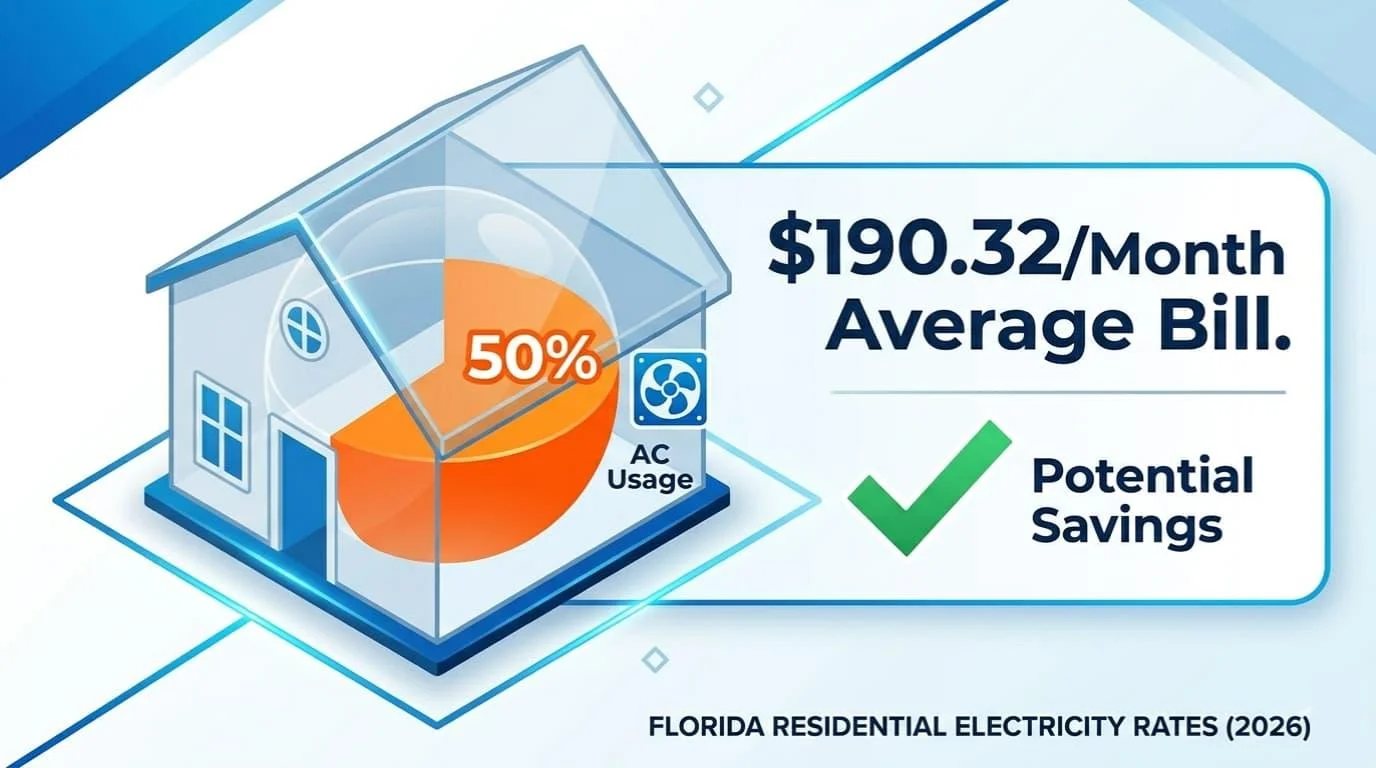
The estimated $190.32 monthly bill for 1,200 kWh of usage, calculated from current EIA rate data, highlights the burden of climate control. In Florida, air conditioning can account for over 50% of a home's electricity consumption during the hottest months. An older, poorly maintained system can consume 1,200 kWh just for cooling in a single month, driving total usage even higher.
That makes the savings from an upgrade clear. Replacing a SEER 10 system with a SEER 16 system can cut cooling energy use by over 35%. On a $190 bill where cooling is half the cost, that means:
- Savings of over $30 per month.
- Annual savings of roughly $360, before the next electricity rate increase happens.
I Care Air Care's growth: serving 4,000+ homes
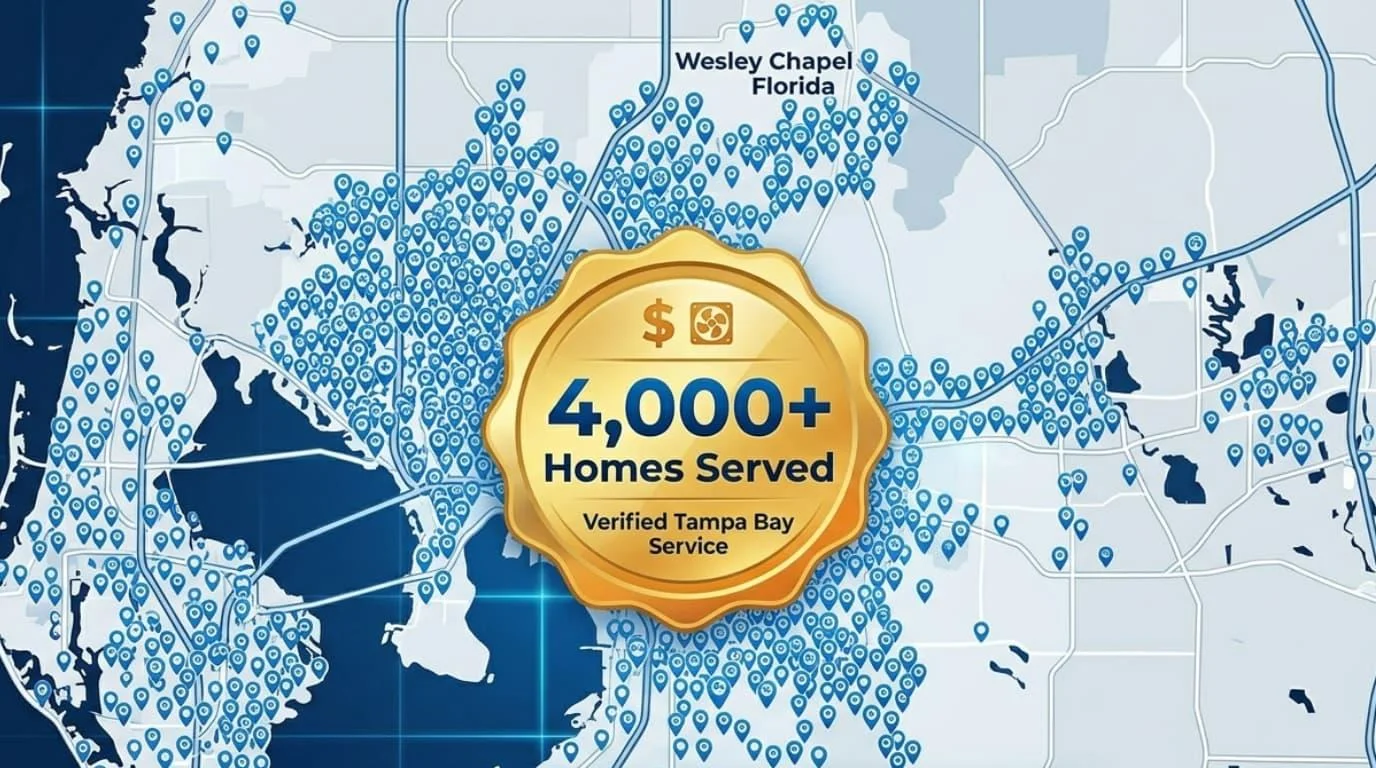
Serving over 4,000 homes in the Tampa Bay area is a milestone built on consistent local service and community trust. This volume of work means we have encountered virtually every type of HVAC system, home layout, and efficiency challenge common to Florida. It represents a deep well of practical experience in proper system sizing, installation for humidity control, and navigating local permit requirements.
For a homeowner, choosing a contractor with this scale of local experience reduces the risk of improper installation, a leading cause of poor efficiency and premature system failure even with the best equipment. See what neighbors say on our reviews page.
The value of 16+ years of HVAC experience in Florida
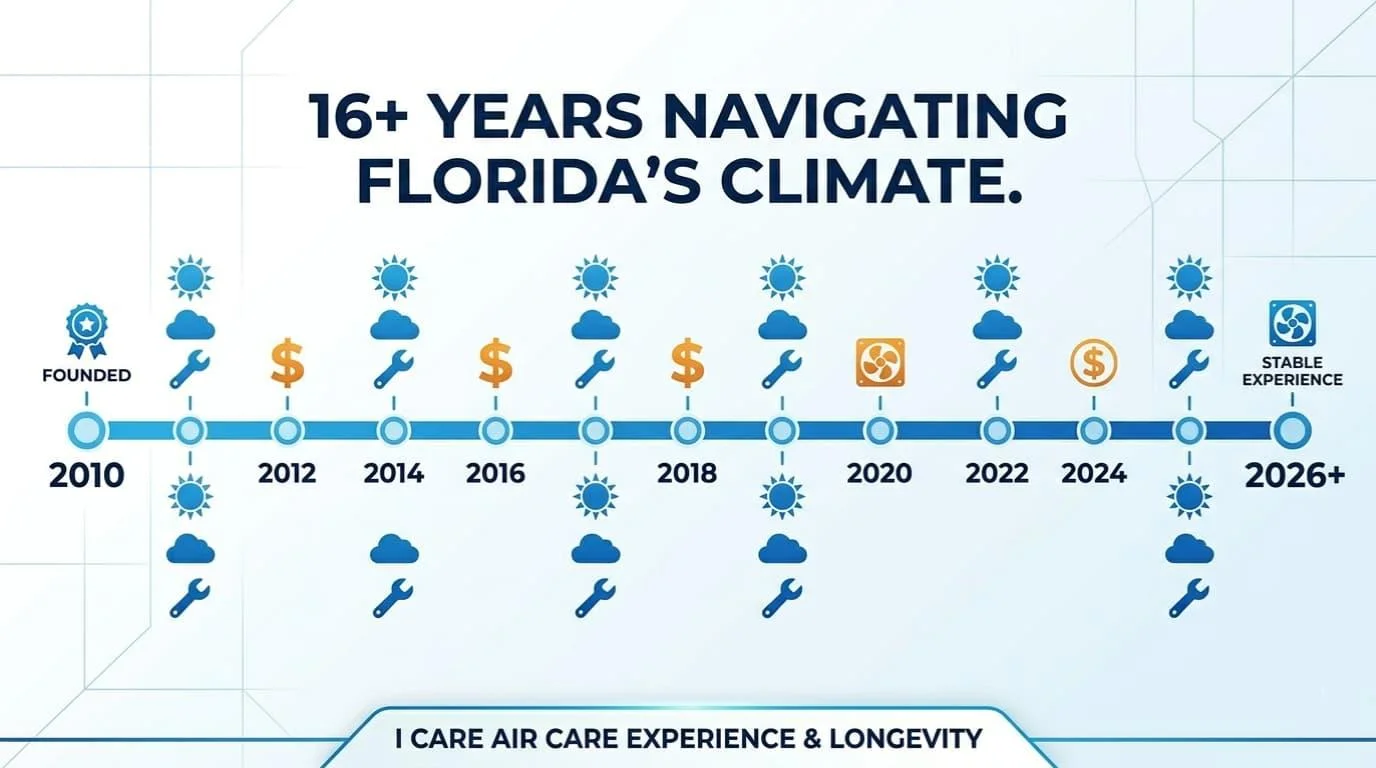
Operating for 16+ years in the Florida market means a contractor has seen it all: multiple incentive program rollouts, major storms, refrigerant phase-outs, and evolving building codes. Florida's combination of high heat and extreme humidity creates unique demands. A system must be sized and installed not just for temperature, but for latent heat removal to manage moisture.
A contractor with long-term local experience understands the practical details that impact performance, comfort, and system longevity:
- The importance of proper airflow.
- The necessity of duct sealing.
- The effect of thermostat placement.
700+ Google reviews: insights on HVAC buying behavior
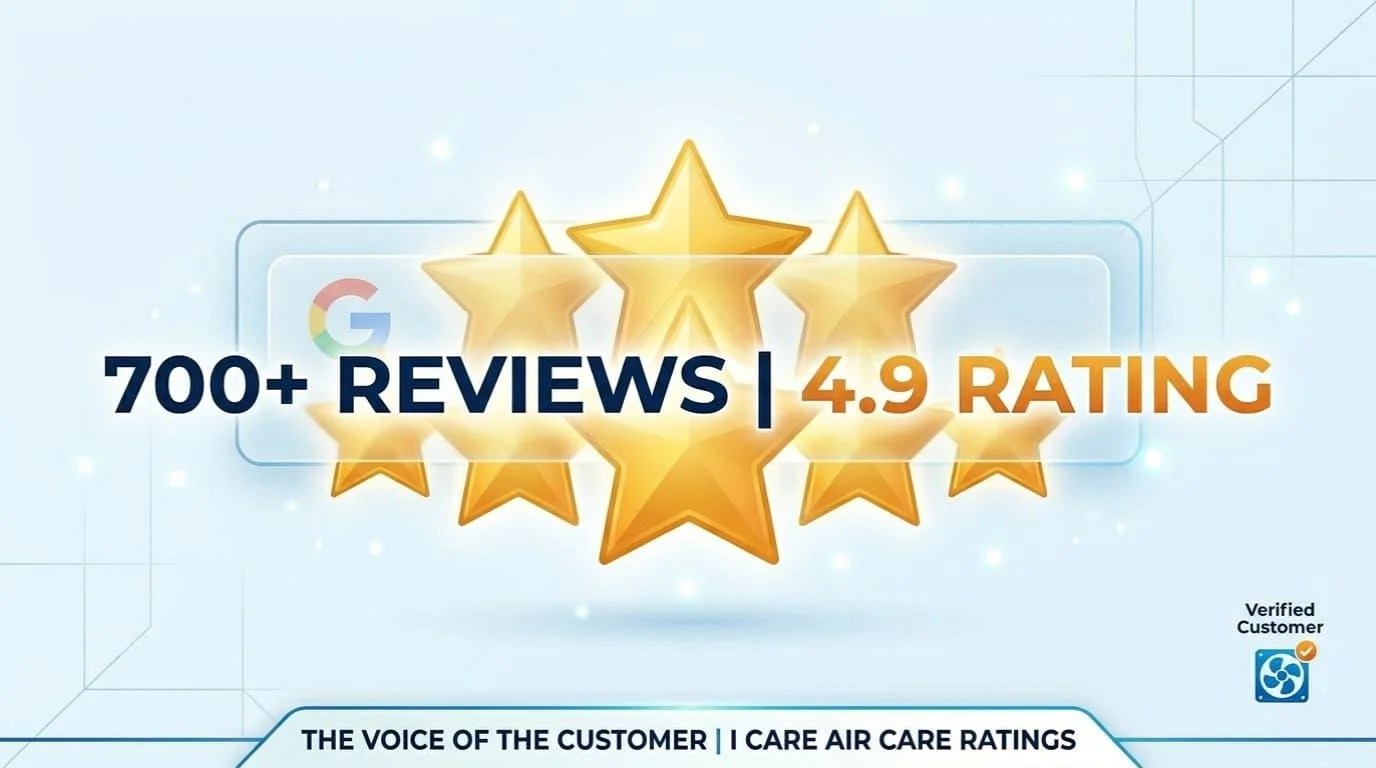
The 700+ Google reviews and 4.9-star average rating underscore a major shift in how homeowners select service contractors. For a significant investment like an AC replacement, online reputation has become the primary trust signal. Homeowners scrutinize reviews for patterns related to pricing transparency, communication, timeliness, and post-installation support. A high volume of positive reviews indicates consistent performance across these concerns, and reflects a business model built on referral and repeat business that aligns the contractor's success with the homeowner's long-term satisfaction.
The significance of Florida HVAC license CAC1816515
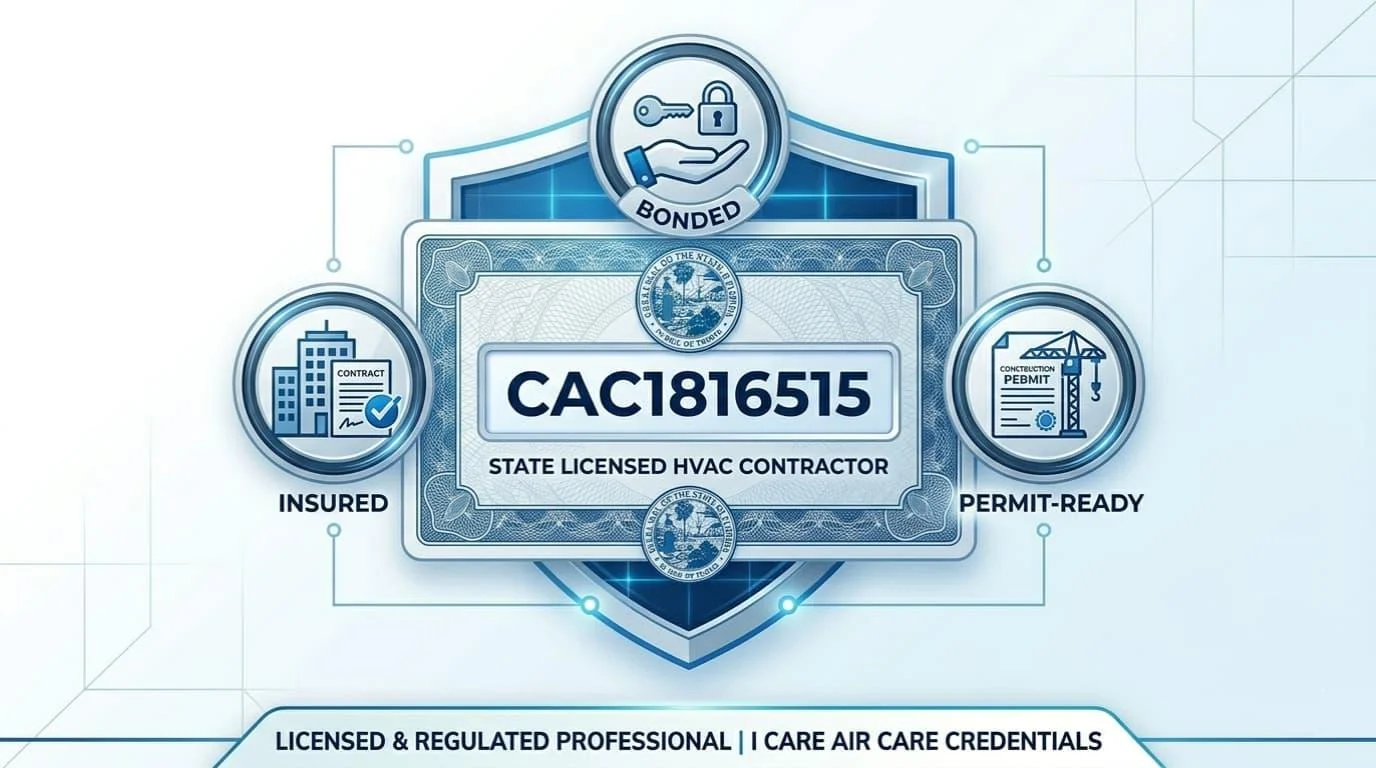
The state license CAC1816515 is a non-negotiable credential that protects homeowners. It verifies that the contractor has passed Florida's testing requirements, carries adequate insurance, and is legally authorized to pull permits. Permitting ensures the installation is inspected for compliance with building and electrical codes, which are designed for safety and efficiency.
Working with a licensed contractor also provides recourse through the state licensing board if serious issues arise. It is a fundamental layer of consumer protection that separates professional operations from unregulated handymen, who may offer lower prices but carry significantly higher risk.
Founded in 2010: a sign of long-term HVAC stability

A company founded in 2010 has demonstrated resilience through economic cycles, supply chain disruptions, and intense seasonal demand. This longevity is a strong indicator of operational stability and good financial management. For a homeowner, it reduces the fear that the company will disappear before a 10-year parts warranty expires, and it suggests an established local reputation the owner is invested in protecting. That stability translates into reliable service, availability of technicians for future maintenance, and a higher likelihood that the company will honor its workmanship commitments years down the line.
Understanding the 1-year workmanship warranty
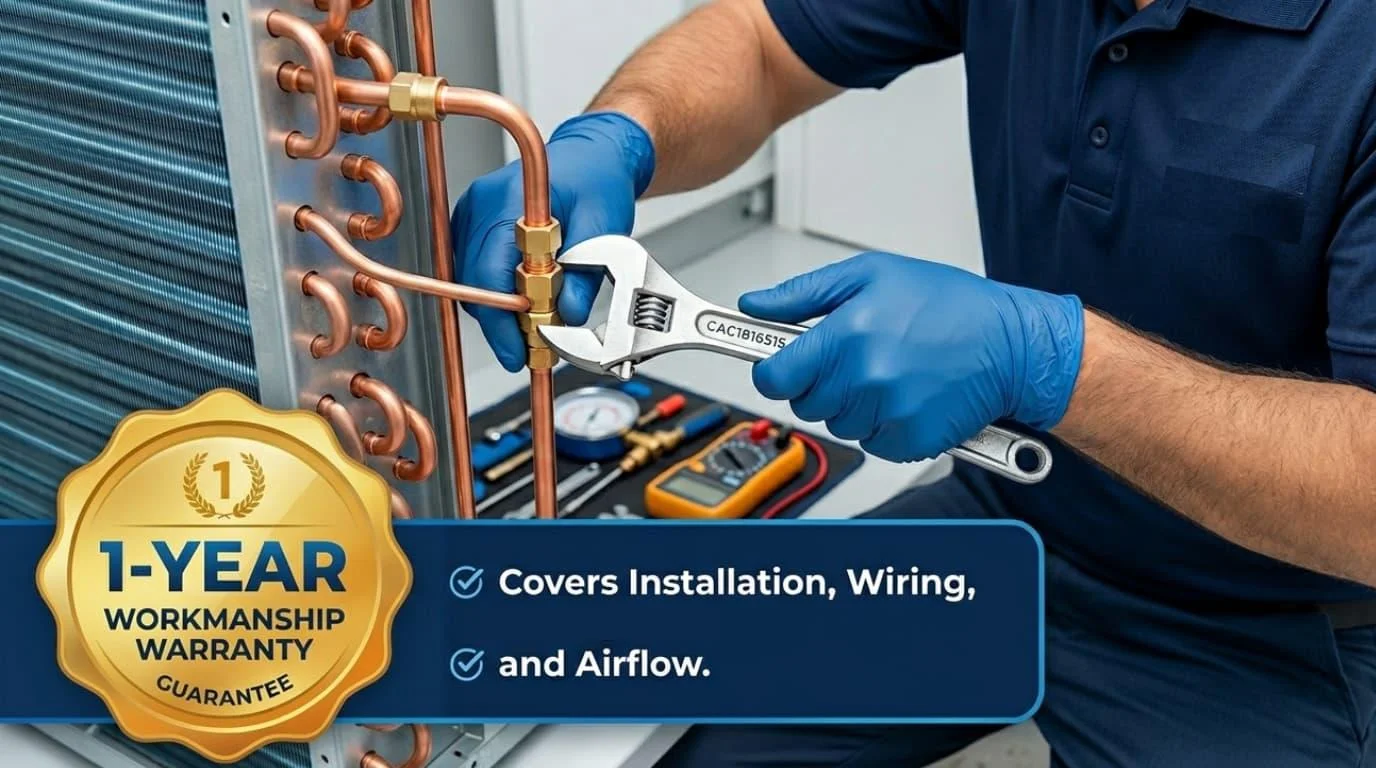
A 1-year warranty on workmanship addresses the most common point of failure in a new AC installation: the quality of the install itself. The manufacturer's warranty covers defects in parts like the compressor or coils. It does not cover problems caused by the installation. A workmanship warranty guarantees the contractor will fix their own errors at no cost, holding them accountable for their skill.
These are installation errors a workmanship warranty would cover:
- Leaks from poorly soldered joints.
- Electrical issues from incorrect wiring.
- Airflow problems from improperly sized ductwork.
These mistakes can cripple system efficiency and cause breakdowns. The warranty provides homeowners with essential peace of mind.
How a stacked 1-year service warranty provides peace of mind
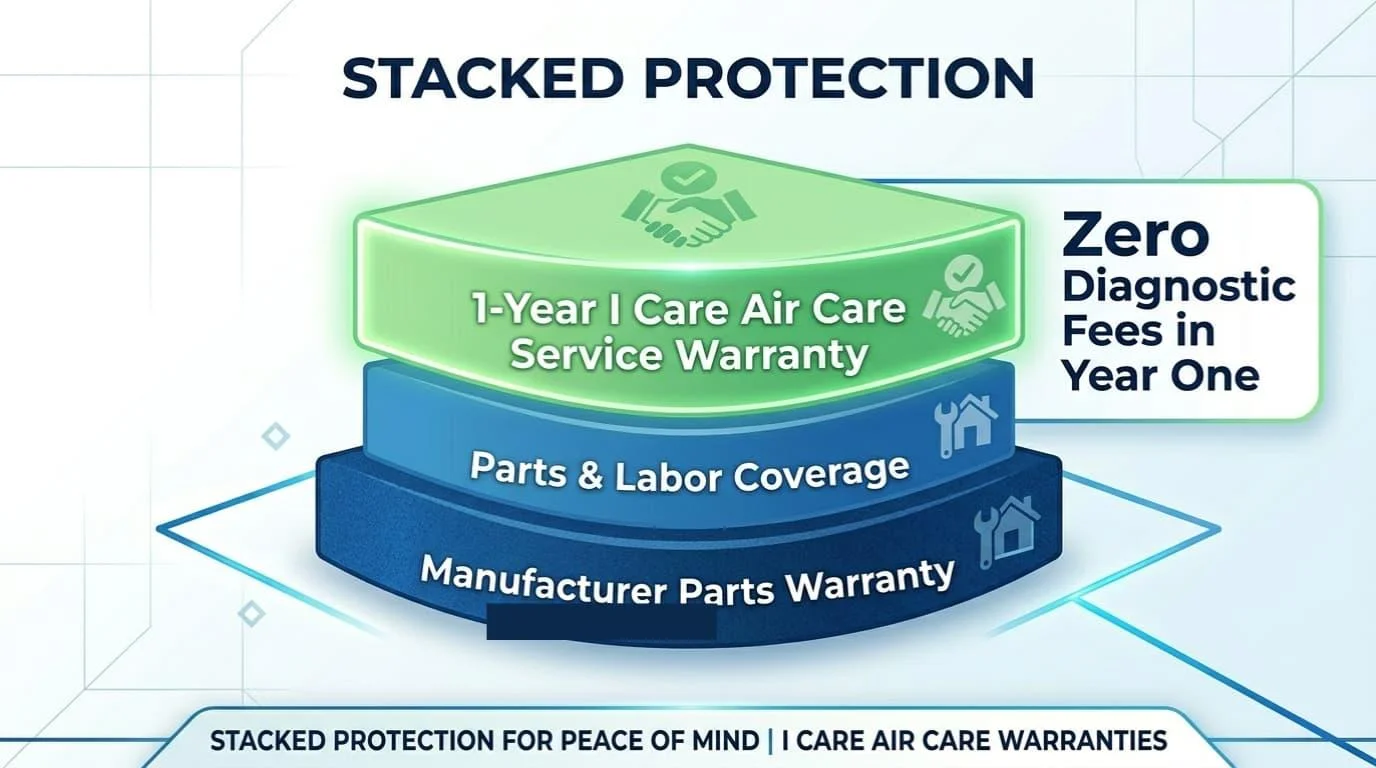
The 1-year service warranty stacked on manufacturer coverage is a value-added layer that covers the cost of diagnostic and service calls. Even with a perfect installation, a new system might need a minor adjustment, such as calibrating the thermostat or checking refrigerant charge. Without this coverage, a homeowner could pay a $100+ service fee just to confirm everything is working correctly. This stacked warranty removes that cost in the first year, ensuring the homeowner's initial experience is hassle-free and reinforcing confidence in the overall investment.
FAQ
Are federal tax credits still available for HVAC and air conditioning upgrades?
Many federal tax credits created under the Inflation Reduction Act still support air conditioning and HVAC upgrades, but timelines and eligibility rules can change. Homeowners should review Section 25C, Section 25D, and the Energy Efficient Home Improvement Credit before starting projects. Some incentives also apply to heat pumps, air-source heat pumps, geothermal heat pumps, and efficiency improvements that reduce utility bills.
Which home upgrades qualify for energy efficiency rebate programs?
Many rebate programs support heat pumps, water heaters, mini-split systems, and energy-saving home upgrades. Some utilities also offer demand-response programs and performance-based incentives. Programs connected to the HOMES and HEEHRA rebate programs or federal tax incentives may also cover electrical upgrades and renewable energy equipment.
Why are some AC incentives becoming harder to access?
Some AC incentives are becoming harder to access because funding limits, policy updates, and changing legislation affect eligibility. Discussions in Congress have created uncertainty around federal tax credits and clean energy incentives. Rising input costs and stricter compliance requirements also affect project approval timelines and installation expenses.
How do heat pumps compare with traditional AC units financially?
Heat pumps often reduce utility bills because they provide both heating and cooling with higher efficiency than many traditional AC units. Some systems also qualify for the Residential Clean Energy Credit and the Energy Efficient Home Improvement Credit. Long-term benefits may include lower energy use, reduced maintenance, and better protection during extreme weather.
What should homeowners check before claiming HVAC tax incentives?
Homeowners should confirm product eligibility, installation requirements, and documentation rules before claiming tax incentives. Important details include ENERGY STAR certification and eligibility under Section 25C. Keep receipts for HVAC equipment, electrical upgrades, and other efficiency improvements connected to rebate programs or tax credits.
Why waiting could cost Florida homeowners more
The "quiet crash" is already happening. Energy costs continue rising while incentives for AC upgrades slowly disappear. For homeowners in Wesley Chapel and across Florida, delaying a replacement may mean paying more every month on an aging system while losing access to valuable financial support.
An outdated AC does not just waste energy, it weakens comfort, reliability, and long-term savings. Upgrading now creates stability before costs climb even higher and incentives fade further.
Take advantage of today's window of opportunity. Explore modern, energy-efficient cooling solutions with I Care Air Care AC replacement, ask about financing options, or call (813) 395-2324 for a no-pressure in-home quote.

Tim founded I Care Air Care in 2010 after 30+ years in the Tampa Bay HVAC trade. EPA Universal certified. The source for all technical guidance published on this site.
Read Tim's full profile →Related local help
These pages connect this guide to the services and local areas homeowners usually need next: