
Quick Answer
Low refrigerant is a leak, not a refill. How Tampa Bay evaporator coils fail, how we find the hole, and published repair versus replacement ranges.
Start here before you book service
- ✓ An air conditioner does not consume refrigerant. If the charge is low, there is a leak.
- ✓ A coil that ices, thaws, then ices again on a clean filter is usually leaking.
- ✓ Do not add refrigerant on top of an unrepaired leak. It will be low again.
- ✓ Spot-solder on a formicary-eaten aluminum coil rarely holds. Replacement is the durable fix.
Sounds like you need a tech?
(813) 395-2324Low charge means a hole, not an empty tank
Homeowners still ask us to "put some Freon in it." R-410A and the newer A2L blends are not motor oil. They do not burn off. If gauges show a light charge, refrigerant left the sealed system through a leak. Topping it off without finding the hole buys you a few weeks of cooling and a second bill. Venting refrigerant to hide a leak is also an EPA problem. Tim holds Section 608 Universal for a reason.
The evaporator coil is one of the most common leak sites we confirm in Tampa Bay. It lives wet. It lives in a cabinet full of household vapors. Aluminum microchannel and tube-and-fin coils both fail here, just on slightly different timelines.
Tim's tip: if a previous company added refrigerant and did not show you a leak location, a nitrogen test, or a dye photo, treat that visit as a delay, not a repair. Ask for the micron vacuum reading and the weighed-in charge against the nameplate on the next call.
What an evaporator coil leak looks like from the living room
You will not see a puddle of refrigerant. You will see the system behave like it is starving.
- Ice, then cooling, then ice again. Change the filter, thaw with the fan on, get a day or two of cold air, then frost returns on the suction line. Airflow problems do not reset on that schedule. Charge problems do. Our frozen coil guide covers the thaw steps. This page is what happens after the second freeze.
- Hissing or bubbling at the air handler. Not always audible. When it is, it is a locating clue, not a DIY invitation.
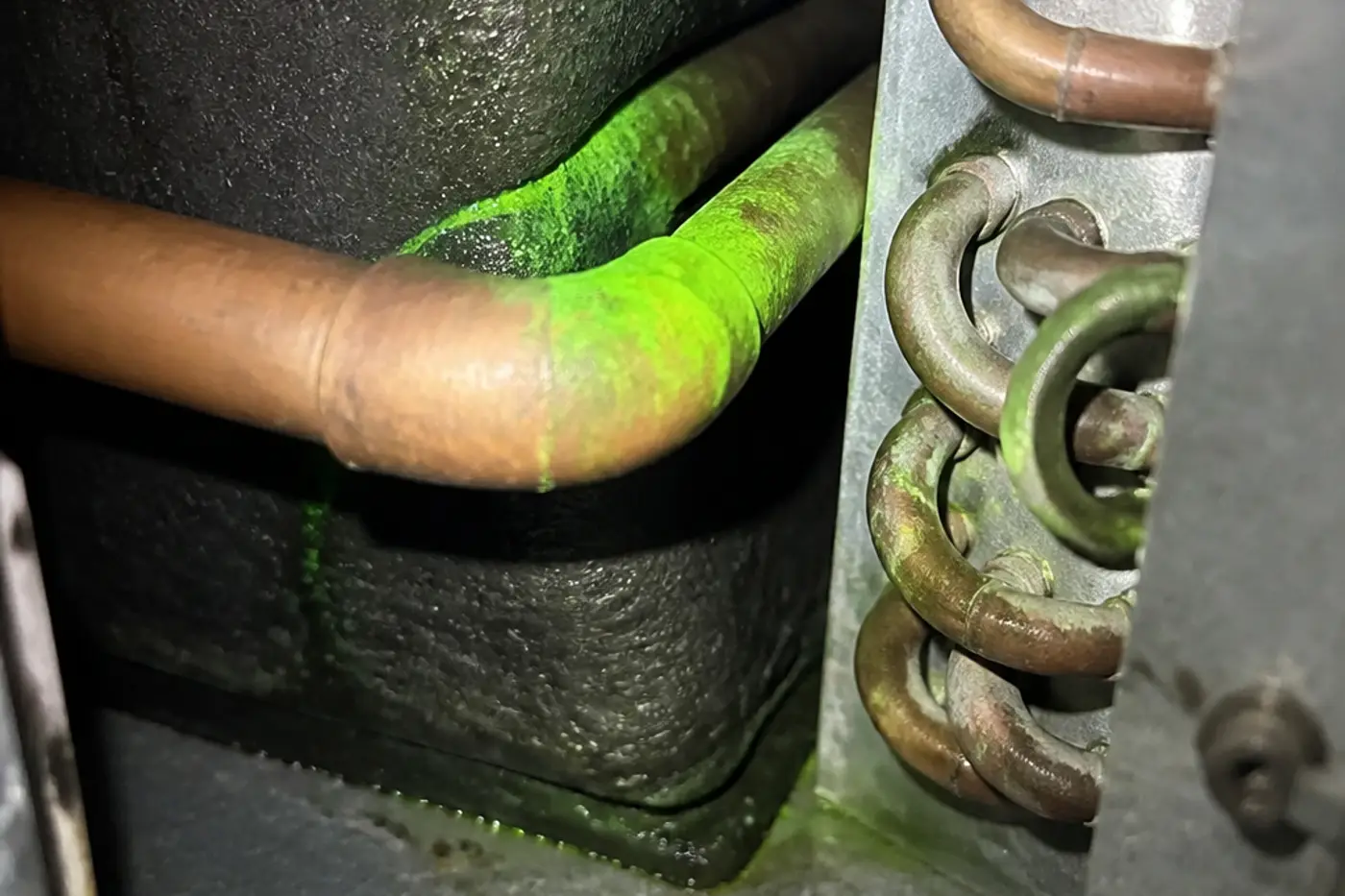
- Oil staining at a braze or a return bend. Refrigerant leaves as gas. Oil often leaves a dirty film that points at the joint.
- Warm supply air with the outdoor unit running hard. Superheat climbs. Subcooling falls. Those are meter readings, not guesses from the driveway.
- A hiss at a Schrader valve on a newer home. Builder-grade valves weep. That leak is on the coil assembly even if the fin pack looks clean.
A dirty coil can freeze too. The difference is persistence. A wash and a filter hold when dirt was the restriction. They do not hold when the circuit is leaking. If you have not ruled dirt out, start with the dirty evaporator coil post, then come back here.
Why Florida coils leak: formicary, vibration, and new-house chemistry
Formicary corrosion, also called ant-nest corrosion, eats microscopic tunnels through aluminum from the inside of the tube. Organic acids from paint, cabinetry, adhesives, and cleaning products mix with the condensate that never really dries off a Florida coil. Newer interiors in Epperson, Mirada, and Wiregrass put more of those vapors in the return air in the first few years. Homes closer to the bay see extra corrosion load on outdoor copper. Indoor coils still fail inland. The mechanism is the wet coil plus the chemistry, not salt spray on Foamflower Blvd.
The rest of the list is mechanical. Vibration at a poorly supported line set. A factory braze that was always thin. A coil that got stabbed during a DIY "thaw" with a screwdriver. We still see that last one more than I would like.
R-22 systems leaking at the coil are a replacement conversation more than a repair conversation. R-410A systems in the 8 to 12 year window are the ones where we still run the numbers both ways.
How we find the leak instead of guessing
Electronic sniffers, UV dye, and nitrogen pressure testing are the three tools that actually locate a hole. Dye is slow and messy if someone already dumped a bottle in last summer. Nitrogen with a standing pressure test tells you whether the circuit holds. A bubble solution at joints catches the obvious weeps. We do not "add two pounds and see how you feel in August."
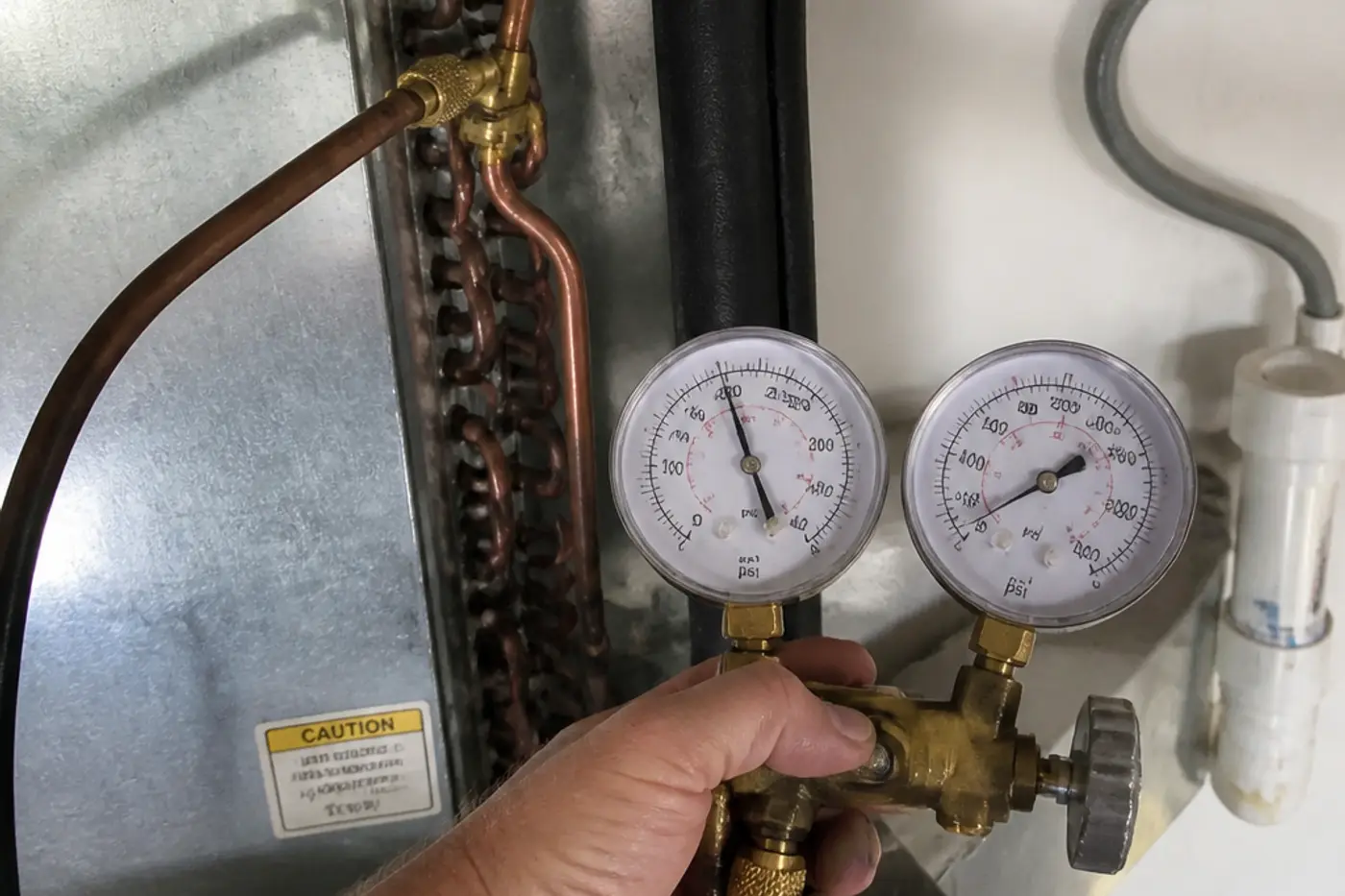
Once the leak is in the coil body itself, especially formicary, a spot repair on aluminum almost never lasts. The next pinhole opens a few inches away. Coil replacement, a deep vacuum to 500 microns, and a weighed charge against the data plate is the repair that stays done. If the outdoor condenser is the same age and tired, we put a full changeout next to the coil-only number so you can see both columns. Age times repair cost versus $5,000 is the same rule we use on compressors.
Published cost ranges, then the warranty fork
Angi puts AC refrigerant leak repair at $250 to $1,600, with many jobs near $800, depending on access and refrigerant. Coil replacement national ranges run about $600 to $2,000 with an average near $1,350 (HomeAdvisor; This Old House $627 to $2,700). Those are cited industry bands, not a quote from this shop. A Rheem coil still under parts warranty changes the conversation to labor, refrigerant, and recovery. We look the serial up before we talk money.
Ask for the current diagnostic fee when you book. If we do the repair on the same visit, that fee is credited toward the work. Same-day when the route allows. One-year parts-and-labor workmanship warranty on the work we do. EPA 608 on every tech who opens the circuit. Florida license CAC1816515 on the invoice.
If the copper line ices a second time, or a prior visit only added refrigerant, call (813) 395-2324. We run this from 27022 Foamflower Blvd in Wesley Chapel. Wesley Chapel AC repair, Tampa, Land O' Lakes, Lutz, New Tampa, Odessa, and Zephyrhills are the regular routes. Book AC repair and we will pressure-test instead of guessing.

Tim founded I Care Air Care in 2010 after 30+ years in the Tampa Bay HVAC trade. EPA Universal certified. The source for all technical guidance published on this site.
Read Tim's full profile →Related local help
These pages connect this guide to the services and local areas homeowners usually need next: