
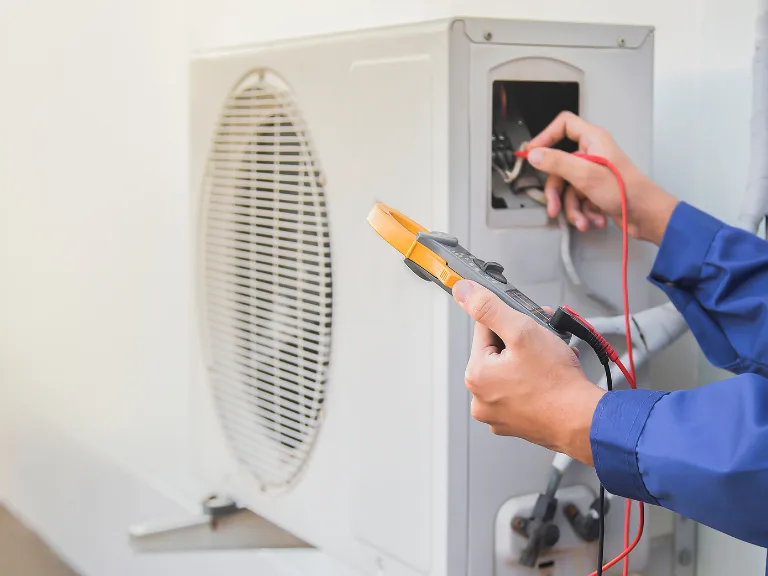
Quick Answer
AC contactor failure symptoms: humming outdoor unit, chatter, or a click with no start. Contactor vs capacitor, and published $150 to $350 replacement ranges.
Start here before you book service
- ✓ Outdoor unit hums but the fan and compressor won't start? Suspect the contactor or capacitor first.
- ✓ A chattering or buzzing sound at the condenser is a classic bad ac contactor symptom.
- ✓ Pitted, burnt, or melted contacts mean the part is done - ac contactor replacement runs $150-$350.
- ✓ A stuck-closed contactor that won't let the unit shut off can destroy the compressor, so kill the breaker and call.
Sounds like you need a tech?
(813) 395-2324What an AC contactor actually is
Inside the outdoor condenser cabinet, past the fan grille and the electrical access panel, sits a small black block about the size of a deck of cards with heavy wires bolted to it. That is the contactor, and for a part that costs less than a tank of gas, it carries an enormous responsibility. Every time your thermostat calls for cooling, the contactor is what physically connects 240 volts of line power to your compressor and your outdoor fan motor. When the call ends, it disconnects them. It does this thousands of times per cooling season.
Here is the mechanism in plain terms. Your thermostat and control board run on a low-voltage 24V circuit, the same harmless wiring that runs to your wall thermostat. That 24V signal energizes a small electromagnet inside the contactor. When the magnet pulls in, it snaps a set of silver-alloy contacts closed, and those closed contacts bridge the 240V line voltage across to the compressor and fan. So the contactor is a relay: a tiny, safe control signal switching a large, dangerous load. It is the electrical gatekeeper between your thermostat and the two most expensive components in the whole system.
That gatekeeper role is exactly why an ac contactor failure is one of the most common no-cool calls we run across Wesley Chapel, Tampa, and Land O' Lakes. It is a wear part living in the harshest spot in your entire cooling system, and Florida makes its life miserable.
Why AC contactors fail so fast in Florida heat
Two forces destroy contactors, and Central Florida cranks both of them to the maximum.
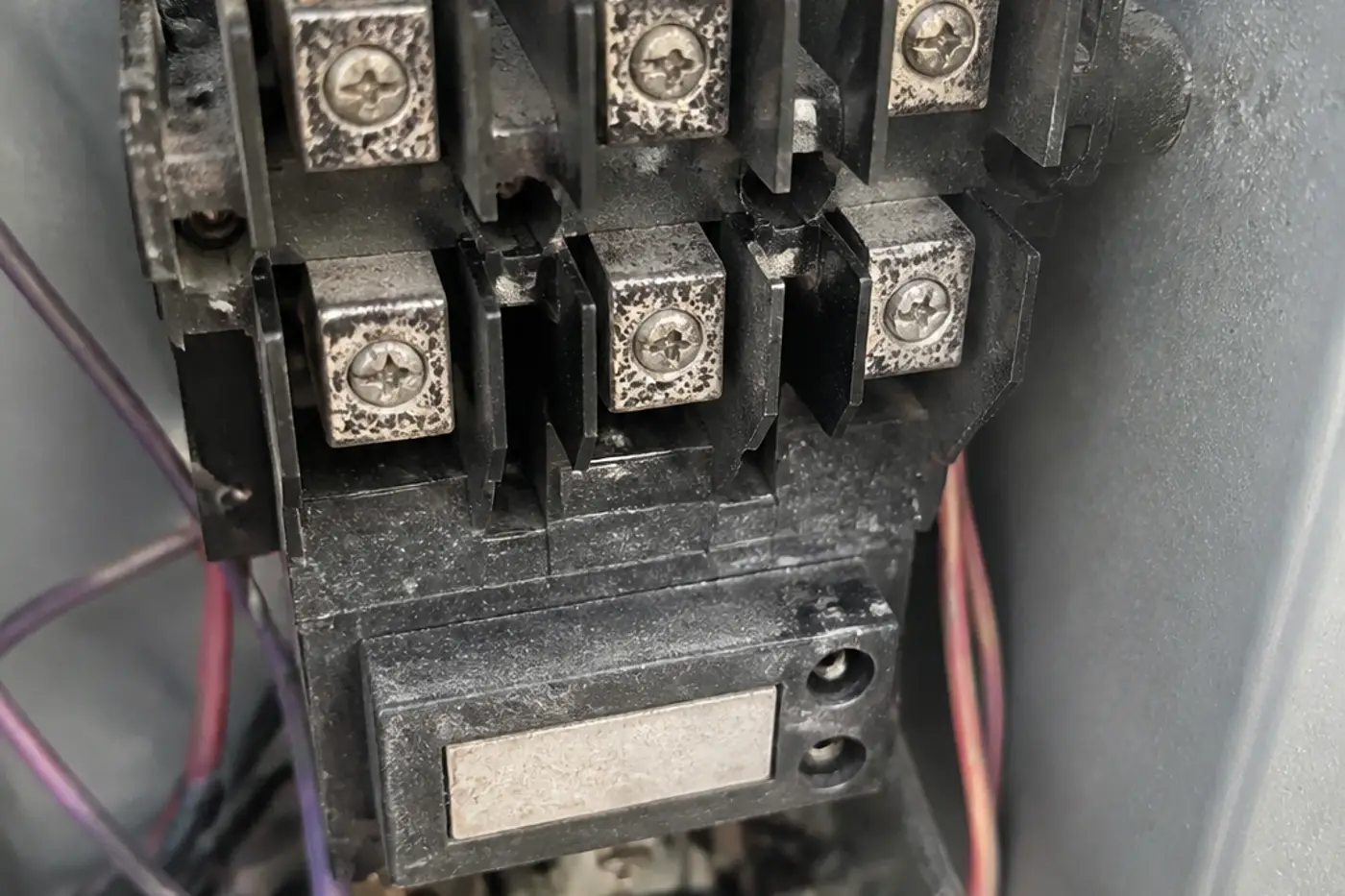
The first is arcing. Every single time those contacts snap closed under a 240V load, a microscopic spark jumps the gap in the instant before metal touches metal. That tiny arc vaporizes a trace of the silver contact surface. One arc is nothing. But multiply it by the number of cooling cycles a Florida system runs from March through November, and the contact faces slowly erode, pit, and blacken. Over years the smooth silver pads turn into cratered, carbon-coated nubs that can no longer make clean electrical contact.
The second force is raw heat. A closed condenser cabinet baking in direct Wesley Chapel sun regularly runs internal temperatures above 140 degrees Fahrenheit. Electrical components are rated for a maximum operating temperature, and sustained heat above that rating cooks the plastic housing, weakens the electromagnet coil, and accelerates every failure mode the part has. A contactor that might last a decade in a mild climate is running at the edge of its thermal envelope for six-plus months a year here. That is the same reason your run capacitor dies early in Florida, and it is why we treat both parts as consumables rather than lifetime components.
There is a third, very Florida-specific killer worth naming: bugs. Ants in particular love the warmth of an energized contactor and will march right across the open contacts. When they bridge the gap they get electrocuted, and their bodies leave carbon and debris welded onto the contact surface. We have opened condenser panels in Lutz and Zephyrhills to find a contactor fouled with a small graveyard of ants across the contacts. It sounds absurd until it is the reason a family has no cooling in July.
Homes in Polk County run the same condenser in the same heat. If the outdoor unit is in Lakeland and it hums without starting, AC repair in Lakeland is the local diagnosis for the contactor and the capacitor. This page covers Tampa, Wesley Chapel, and Lutz.
Get Your Estimate
Takes less than 60 seconds
Step 1 of 2 - Choose a service
Bad AC contactor warning signs
Contactors rarely die without warning. They usually give you a week or two of symptoms first. Here are the ac contactor failure signs we tell homeowners to watch and listen for.
- The outdoor unit hums but nothing spins. You hear a low electrical hum from the condenser, but the fan on top is dead still and the compressor never kicks in. The contactor coil may be energized while the pitted contacts fail to pass power through. This is the single most common presentation of a bad ac contactor.
- Chattering or rapid buzzing. A weak or failing coil can pull the contacts in and out rapidly, producing a machine-gun buzzing or chattering sound at the unit. That is the contactor struggling to hold a stable connection, and it is punishing the compressor with a burst of hard starts.
- A single loud click with no start. You hear the contactor try to pull in, one distinct clunk, and then silence. The mechanism moved but the contacts are too far gone to carry the load.
- The unit won't shut off. This is the dangerous one. If the contacts have arced so severely that they physically welded together, the contactor is stuck closed. Your thermostat says stop, but 240V keeps flowing and the compressor runs nonstop, even with the thermostat satisfied or turned off. A compressor running for days straight with no rest is a compressor headed for an early grave.
- Intermittent cooling. The system cools fine one afternoon, quits the next, then works again. Degraded contacts make an inconsistent connection, so the unit starts sometimes and refuses other times depending on temperature and vibration. Intermittent faults are classic late-stage contactor behavior.
- Visible pitting, burning, or melting. With the disconnect pulled and power off, a technician can see it directly: contact faces pitted like the surface of the moon, black carbon scoring, or in bad cases an actual melted spot on the housing. A burnt contactor on ac unit inspection is one of the fastest, most certain diagnoses in the trade.
If any of these match what your system is doing, that is a call, not a wait-and-see. We cover this exact fault daily on our AC repair routes, and catching a failing contactor before it welds shut is the difference between a $200 part and a compressor replacement several times that price.
Contactor vs capacitor: how to tell them apart
These are the two cheap electrical parts that homeowners constantly confuse, and for good reason. Both live in the same condenser cabinet, both are inexpensive, both cause the exact same headline symptom: the outdoor unit hums but won't start. If you have read our rundown of the reasons an AC won't cool, you already know these two parts sit at the top of the list. But they are different components doing different jobs, and telling them apart matters.
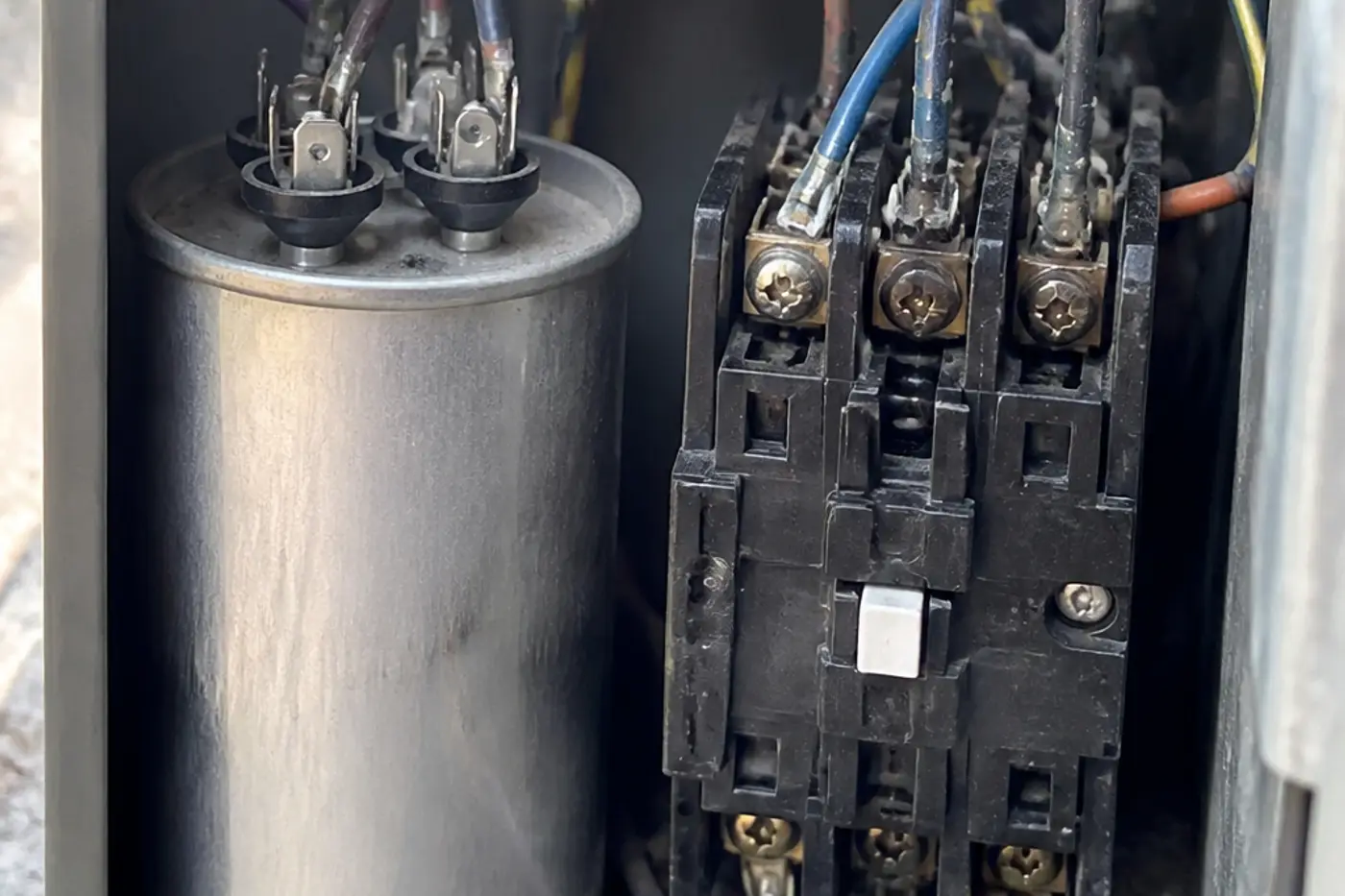
The capacitor is a cylindrical or oval metal can, usually silver, with a rounded top. Its job is to store and release an electrical charge that gives the compressor and fan motor the jolt of extra torque they need to overcome inertia and start spinning. Think of it as a battery-like kick-starter. When a capacitor weakens, the motors lack the muscle to break free, so the unit hums and strains but the fan or compressor can't get moving.
The contactor is the rectangular black switch we have been describing. Its job is not to provide power for starting, it is to connect or disconnect the power in the first place. When a contactor fails, the electricity may never reach the motors at all, or it reaches them erratically.
So how do you tell which one stranded you? A few honest tells, though the definitive answer comes from a meter:
- Sound. Chattering, buzzing, or rapid clicking points strongly at the contactor. A steady hum with total stillness can be either, but bulging or leaking on the metal can points at the capacitor.
- The unit won't turn off. This symptom is essentially always the contactor stuck closed. A failed capacitor never causes a unit to run nonstop.
- Visual. A domed, swollen, or oily-topped capacitor is visibly dead. Blackened, pitted contacts point at the contactor. Both are visible with the panel off, and both mean a part swap.
- The meter. A technician reads the capacitor's microfarads against its nameplate rating and checks for voltage passing across the contactor's contacts. That test settles it in under a minute and removes all guesswork.
We deliberately went deeper here than our broader guide to a blown AC fuse, because the contactor-versus-capacitor mix-up is the number-one reason people buy the wrong $20 part online and end up frustrated. Both are cheap. Neither is worth risking your life to guess at, for reasons we will get to.
AC contactor replacement cost
The good news about a contactor is that it is one of the least expensive repairs in HVAC. Published contractor-market ranges put ac contactor replacement cost at $150 to $350 for parts and labor. That band covers the part, the labor to de-energize and discharge the cabinet, land the wiring, and test the unit under load. Single-pole versus double-pole contactors and amperage ratings are what stretch the range. Those are market bands, not an I Care Air Care price list.
| Published repair | Typical market range |
|---|---|
| AC contactor replacement | $150 to $350 |
| Run capacitor replacement | $180 to $320 |
Ask for the current diagnostic fee when you book. If we complete the repair on the same call, that fee is credited toward the work.
As for lifespan, a contactor is a wear item with no fixed expiration date. In Florida's heat and runtime, we commonly see them start failing anywhere from year five to year ten, sometimes sooner on builder-grade equipment where the cheapest compliant part was specified. Compared against the cost of the compressor it protects, replacing a $200 contactor at the first sign of trouble is one of the best-value moves a homeowner can make. Letting a welded-closed contactor run the compressor into the ground is one of the worst.
Why replacing an AC contactor is not a safe DIY job
We are going to be direct here, because this part looks deceptively simple and the internet is full of videos that make it look like a five-minute fix. Do not replace ac contactor hardware yourself. Here is the honest reasoning, not scare tactics.
First, line voltage. A contactor switches 240 volts. That is not the friendly 24V control side, it is the leg that can stop your heart. Even with the outdoor disconnect pulled, wiring mistakes on reassembly can energize the cabinet unexpectedly or create a short that arcs violently.
Second, and less obvious, is the capacitor sitting right next to the contactor. A capacitor stores an electrical charge even after all power is cut. A charged capacitor can hold enough energy to deliver a serious, injuring shock to anyone who brushes its terminals with a screwdriver or a knuckle, sometimes hours after the breaker is off. Professionals discharge the capacitor deliberately with an insulated tool before touching anything in that cabinet. Homeowners routinely do not know this step exists, and that is where the emergency-room stories come from.
Third, correct diagnosis and correct part. Landing the wires on the wrong terminals, installing an under-rated contactor, or replacing a contactor when the real fault was the capacitor or the compressor all lead to a callback and sometimes a bigger failure. A licensed technician confirms the fault with a meter, installs the exact-spec part, and tests the unit under load before leaving. Tim Hawk holds Florida license CAC1816515 and is EPA Section 608 Universal certified, and every contactor we install is backed by our 1-year parts-and-labor workmanship warranty. That warranty is meaningless on a DIY swap, and the risk is entirely yours.
When a stuck-closed contactor has your compressor running nonstop in the middle of a July night, that is exactly the situation our emergency AC repair line exists for. Same-day service is often available when the route schedule allows.
How maintenance extends contactor life
You cannot stop a contactor from arcing, that is physics. But you can dramatically slow its decline and, more importantly, catch it before it welds shut and takes the compressor with it. This is where a maintenance visit earns its keep.
During a tune-up on our AC maintenance plan, a technician pulls the electrical panel and inspects the contactor directly. We look at the contact faces for pitting and carbon, check the coil, measure the voltage drop across the contacts under load, and clear out any ants, spiders, wasp nests, or debris that have moved into the warm cabinet. A contactor showing early pitting on a system that is already eight-plus years into Florida service is one we will often recommend swapping proactively during the visit, while the system is open and de-energized, rather than waiting for it to strand you on the hottest afternoon of the year.
That same maintenance visit also cleans the condenser coil so the unit runs cooler and cycles less, which reduces the arcing count over the season, and it verifies the capacitor is within spec so the compressor is not straining every start. The parts in that cabinet all age together, and catching one worn component early is what keeps a $200 repair from cascading into a four-figure one. This is the boring, unglamorous work that quietly prevents the summer emergency, which is precisely why we push it.
When to call I Care Air Care
Call us the moment your outdoor unit does any of the following: hums without starting, chatters or buzzes, clicks once and goes silent, cools intermittently, or refuses to shut off. That last one is urgent. If the unit will not stop running even with the thermostat off, go to your breaker panel, switch off the AC circuit to protect the compressor, and then call us.
A contactor is a fast, affordable fix in the right hands, and it is one of the parts we carry stocked on every truck across Pasco, Hillsborough, and Polk counties. Ask for the current diagnostic fee when you book. If we complete the repair on the same call, that fee is credited toward the work, and every part we install carries a 1-year parts-and-labor workmanship warranty. As a Rheem Pro Partner with a 4.9-star rating across more than 700 Google reviews, we would rather replace a failed contactor today than your compressor next week.
Call Tim and the team at (813) 395-2324 or book online, and let us get clean, reliable power flowing to your compressor again. We dispatch from Foamflower Boulevard in Wesley Chapel, so AC repair Wesley Chapel is our shortest route of the day, and air conditioning repair Wesley Chapel stays on that page. Farther out, AC repair near me covers Tampa, Land O' Lakes, Lutz, New Tampa, Odessa, and Zephyrhills.

Tim founded I Care Air Care in 2010 after 30+ years in the Tampa Bay HVAC trade. EPA Universal certified. The source for all technical guidance published on this site.
Read Tim's full profile →Related local help
These pages connect this guide to the services and local areas homeowners usually need next: