
Quick Answer
Why Wesley Chapel homeowners replace AC before it fails: rising Florida cooling loads and roughly $500 a year in heat-pump savings.
Start here before you book service
- ✓ The U.S. residential central AC market is projected to reach $30.8 billion in 2026.
- ✓ Efficient heat pumps can save roughly $500 per family each year, per the U.S. DOE.
- ✓ 96% of analyzed U.S. cities now need more cooling than they did in the 1970s.
- ✓ Upgrading before failure locks in lower operating costs for up to 15 years.
Sounds like you need a tech?
(813) 395-2324In Wesley Chapel and across Florida, rising temperatures and higher energy demand are making efficient residential AC installation more important than ever. Keeping your home cool is no longer just about comfort. It also helps reduce energy costs, improve reliability during extreme heat, and prepare homes for longer cooling seasons.
For homeowners in Wesley Chapel and the Tampa Bay area, Florida's long cooling seasons and high humidity can place constant strain on residential AC systems. As summer temperatures continue rising, many households are seeing higher energy usage and increased demand for reliable, energy-efficient cooling solutions.
This guide walks through the market trends, energy challenges, and practical steps you can take, focusing on how local solutions can help you adapt.
Key statistics on surging demand for energy-efficient residential AC
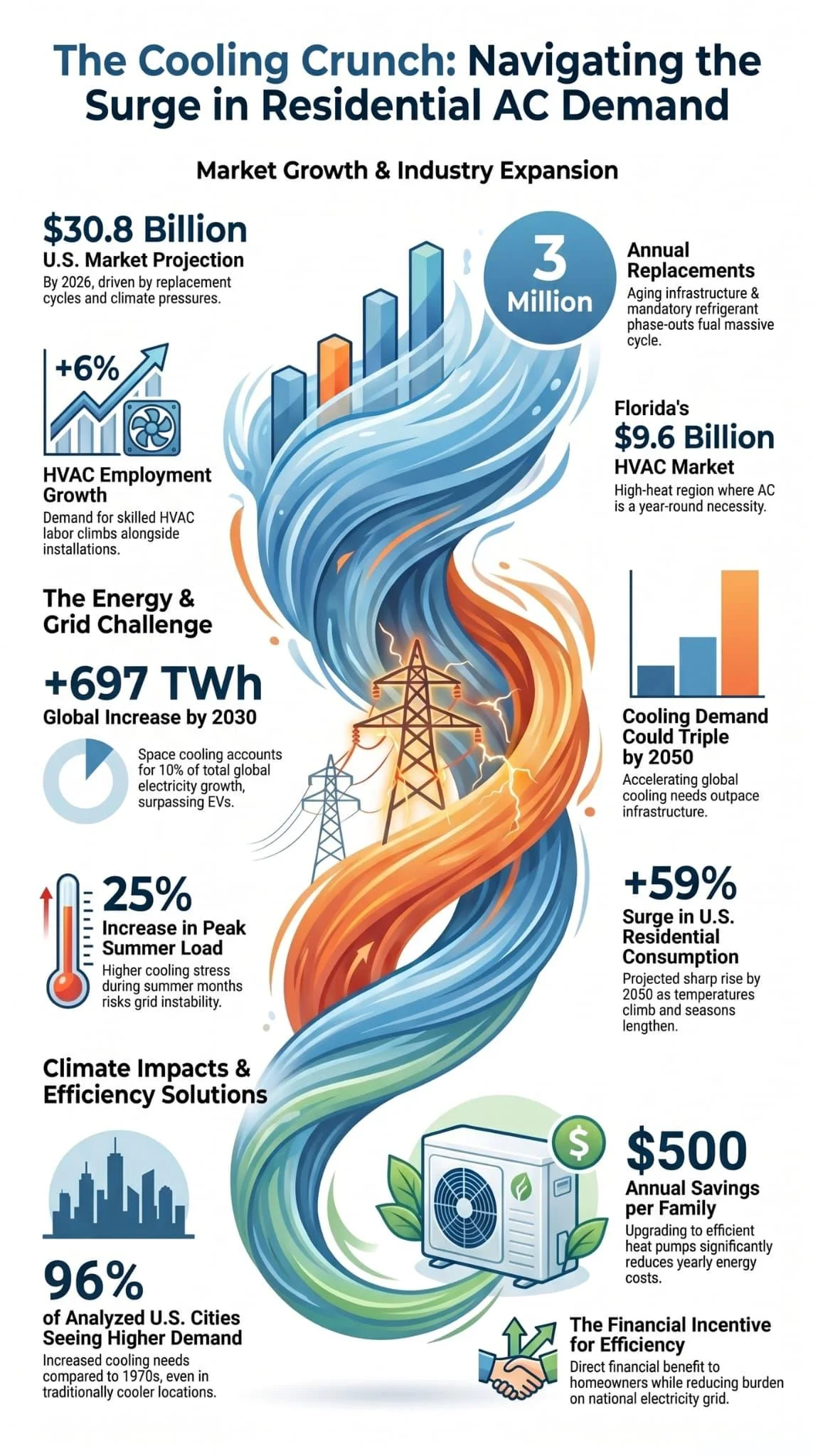
The convergence of climate change, urbanization, and aging infrastructure is creating a perfect storm for the residential cooling industry. The data paints a clear picture: demand is climbing, electricity grids are under unprecedented stress, and the financial incentive for homeowners to upgrade to efficient systems is stronger than ever.
- $30.8 billion - The projected size of the U.S. residential central AC market in 2026 (Intel Market Research), driven by replacement cycles and climate pressures.
- +697 TWh by 2030 - Space cooling is expected to add nearly 700 terawatt-hours of electricity usage globally, about 10% of total electricity growth (International Energy Agency via Statista).
- +59% by 2050 - U.S. residential AC electricity consumption is projected to surge as temperatures rise and cooling seasons extend (Climate Central / EIA).
- $500 per family annually - The U.S. Department of Energy estimates efficient heat pumps can meaningfully reduce yearly energy costs for homeowners.
- 96% of cities analyzed - Nearly all studied U.S. cities, including northern ones like Minneapolis, now experience increased cooling demand compared to the 1970s (Climate Central).
- +6% HVAC employment growth - Skilled HVAC labor demand continues climbing alongside installation demand (U.S. Bureau of Labor Statistics).
- Cooling demand could triple by 2050 - Global cooling needs are accelerating faster than many infrastructure systems can handle (IEA via UNEP).
Why the U.S. residential AC market could reach $30.8 billion by 2026
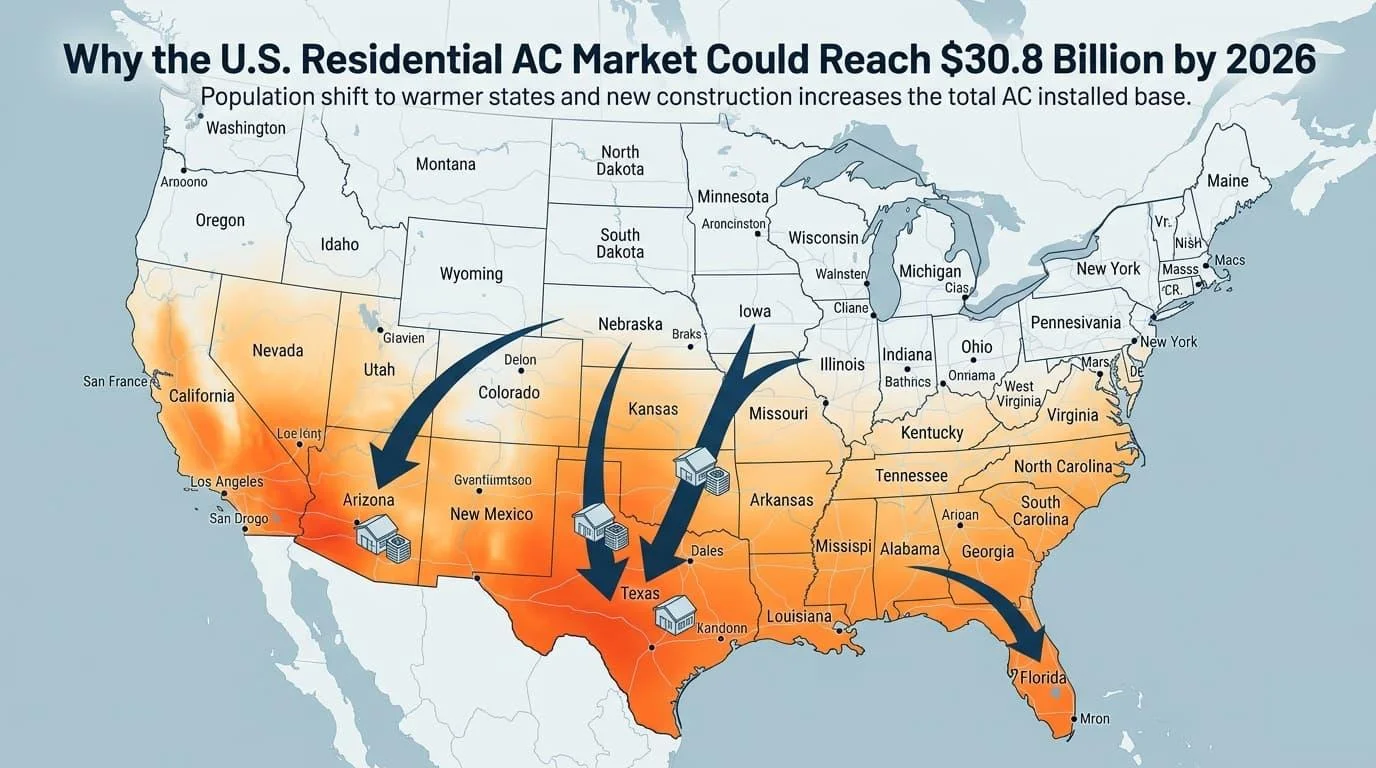
According to residential HVAC market forecasts and industry analysts, the U.S. residential central AC market is projected to reach $30.8 billion by 2026 due to rising replacement demand and climate-driven cooling needs. This growth is driven by a replacement wave for systems installed 10 to 15 years ago, which are now failing or becoming prohibitively inefficient. Population migration to warmer states and new home construction in those regions also directly increases the installed base of AC units.
Stricter federal and regional efficiency standards are compelling upgrades, too. Older units with low SEER ratings are becoming expensive to operate as electricity prices rise. Finally, the integration of smart home technology, where AC systems connect with thermostats and energy monitors, is creating a premium market for advanced, controllable systems. Today's homeowners want cooling systems that improve comfort, reduce monthly bills, and work efficiently with smart thermostats.
Why cooling demand could add +697 TWh to global electricity use by 2030
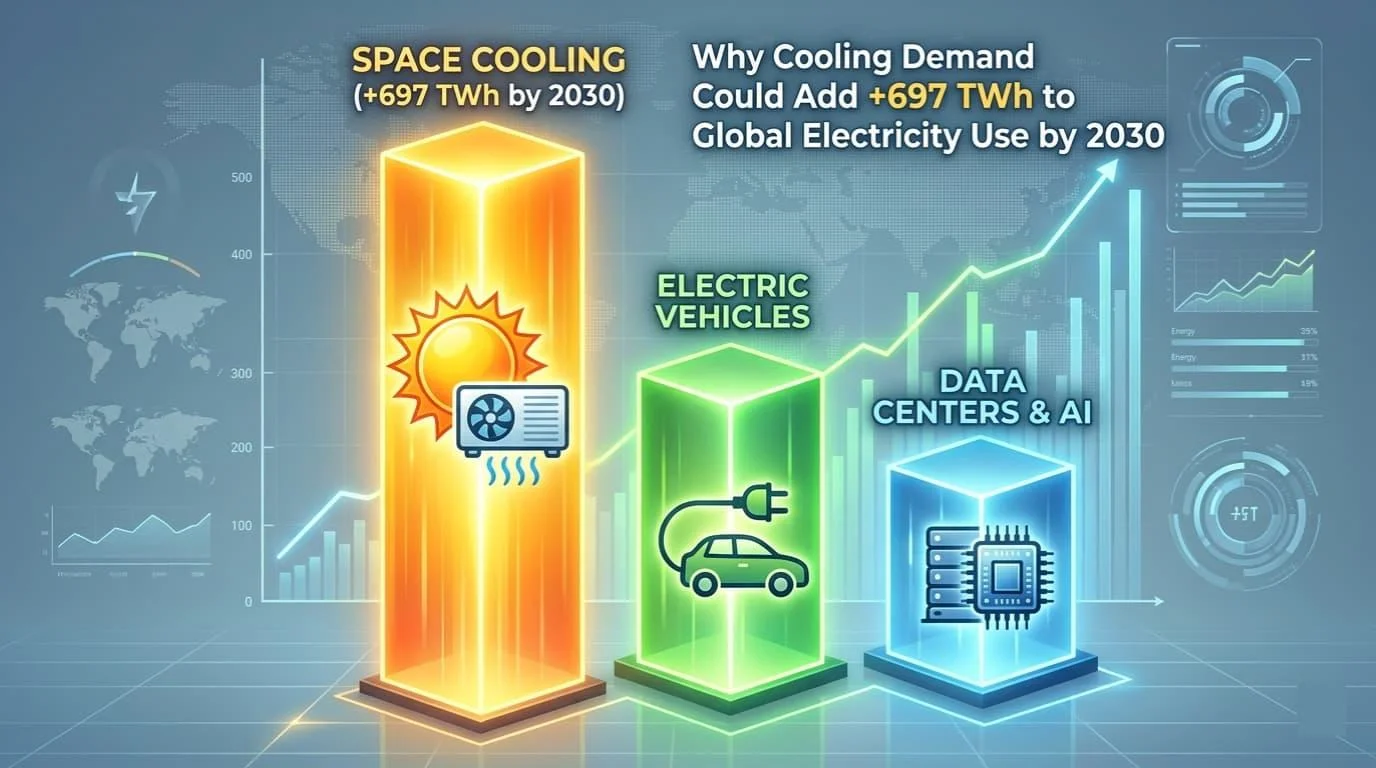
According to projections from international energy agencies, space cooling is expected to become one of the fastest-growing sources of global electricity demand by 2030. The projection that space cooling will add +697 TWh is a staggering figure. To put it in context, that is roughly equivalent to the current total annual consumption of a major industrialized nation.
The driver is simple: more people in hotter places needing more cooling for longer periods. Urbanization in tropical and subtropical climates is placing millions of new households into AC-dependent environments, and extended periods of extreme heat are becoming more common across many regions. This trend places cooling in direct competition with other major electricity growth sectors, like electric vehicles and data centers, for grid capacity and generation resources.
| Sector | Projected demand growth impact | Primary driver |
|---|---|---|
| Space cooling | High (+697 TWh by 2030) | Extreme heat, urbanization, and rising living standards |
| Electric vehicles | Moderate to high | Transportation electrification policies and consumer adoption |
| Data centers and AI | Rising | Expansion of cloud computing and artificial intelligence infrastructure |
Why U.S. home AC consumption could increase +59% by 2050
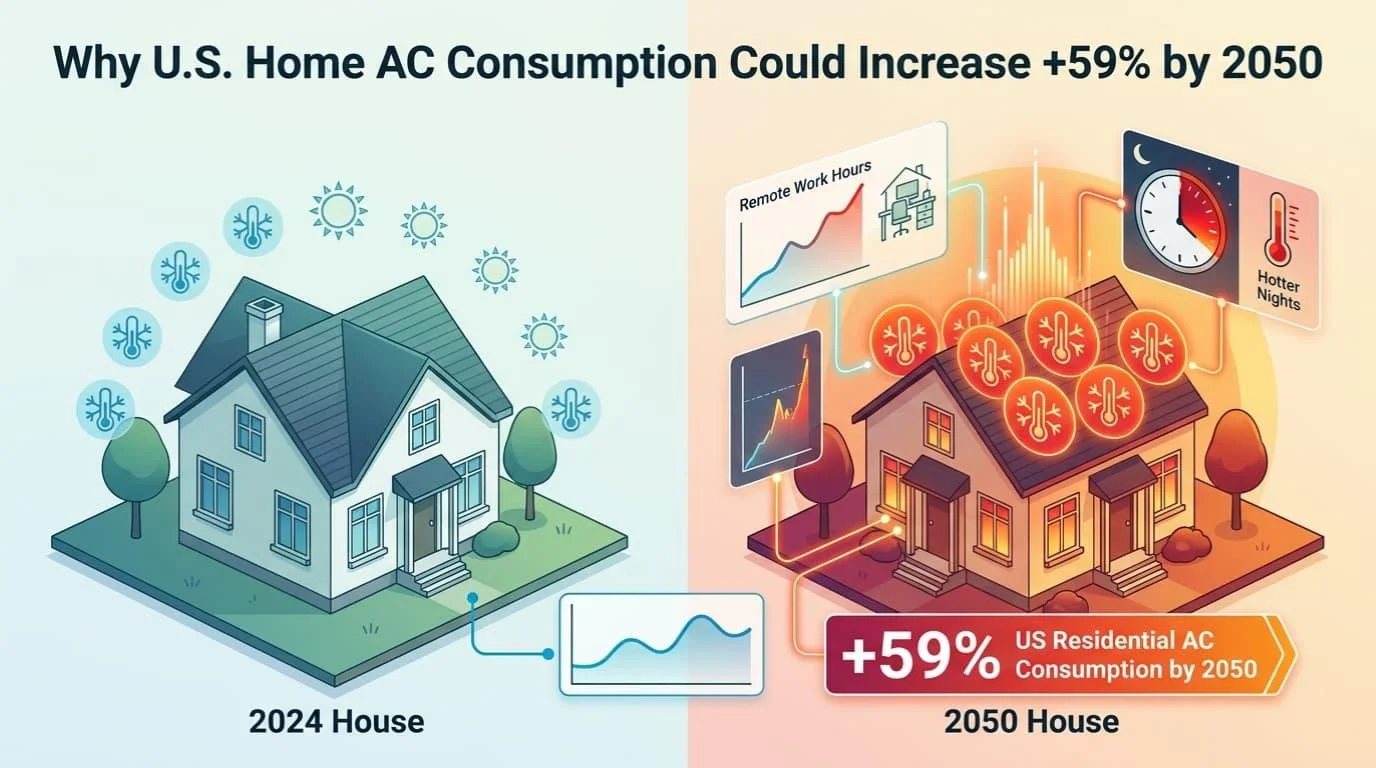
According to long-term climate and energy consumption forecasts, rising temperatures and extended cooling seasons are expected to significantly increase residential AC electricity usage across the United States. The projected +59% increase reflects growing climate and energy pressures nationwide. Summers are starting earlier, ending later, and featuring hotter overnight temperatures that prevent homes from cooling down naturally.
Several key factors are driving this rise:
- Climate change. Scientists note a nationwide increase in "cooling degree days," a measure of how much cooling is needed based on temperature.
- Population shifts. Continued movement to Sun Belt states means more homes needing heavy AC use.
- Remote work. More people now cool their homes all day, not just in the evenings, changing energy use patterns.
This mix of climate and behavior changes points to a future of much higher household energy use for cooling.
How efficient heat pumps could save $500 per family every year
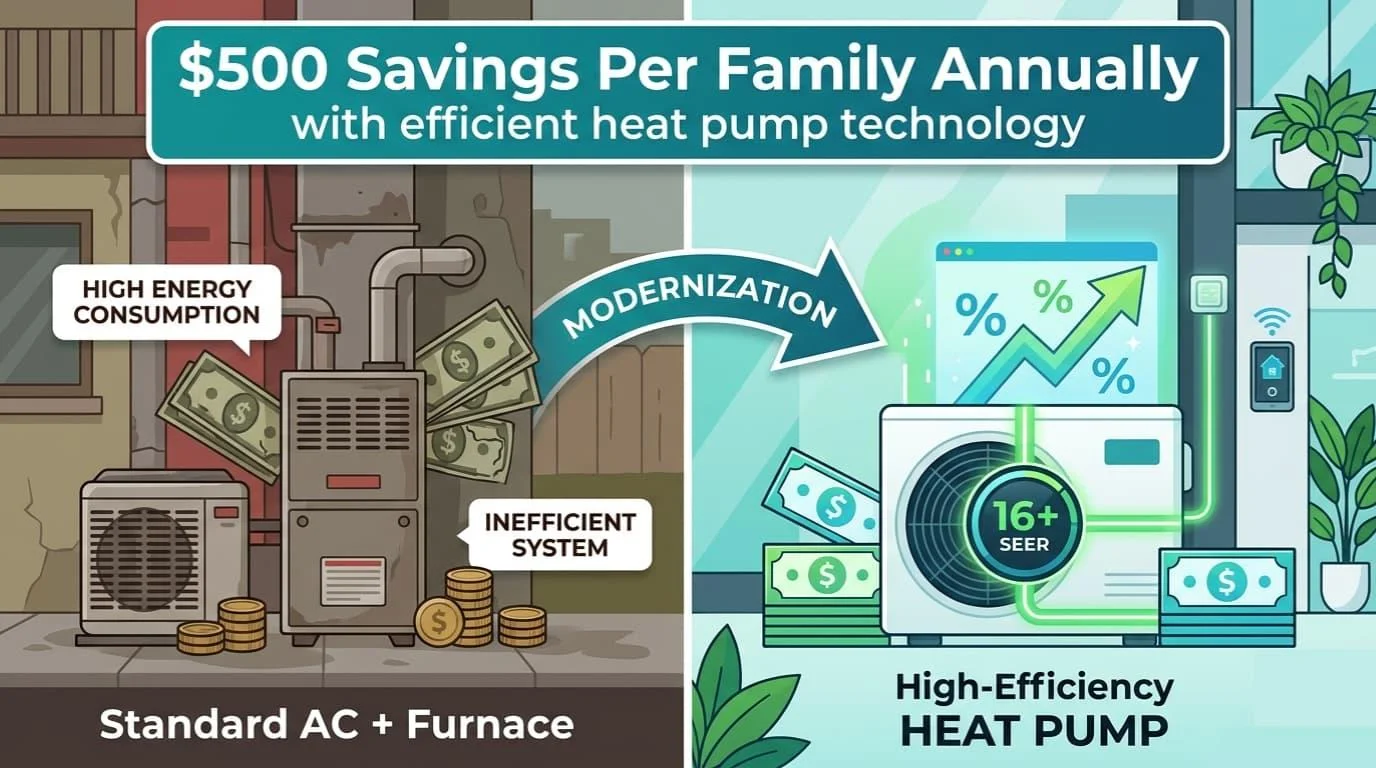
According to the U.S. Department of Energy, efficient heat pumps can save about $500 per family annually, a concrete financial argument for modernization. This saving stems from the dual efficiency of modern heat pump technology. Unlike traditional AC units that only cool, heat pumps provide both cooling and heating, often with significantly higher efficiency (measured in SEER and HSPF ratings) than separate furnace and AC systems.
The savings show up as lower monthly electricity bills, especially in regions with moderate winters where the heat pump replaces an inefficient electric resistance heater or a gas furnace. Many new heat pumps also qualify for federal tax credits and local utility rebates, reducing the upfront cost. For homeowners, this turns the abstract idea of "energy efficiency" into a clear, recurring annual benefit. If your system is on its last legs, our team can walk you through heat pump options and financing side by side.
Why 96% of U.S. cities now need more cooling than in the 1970s
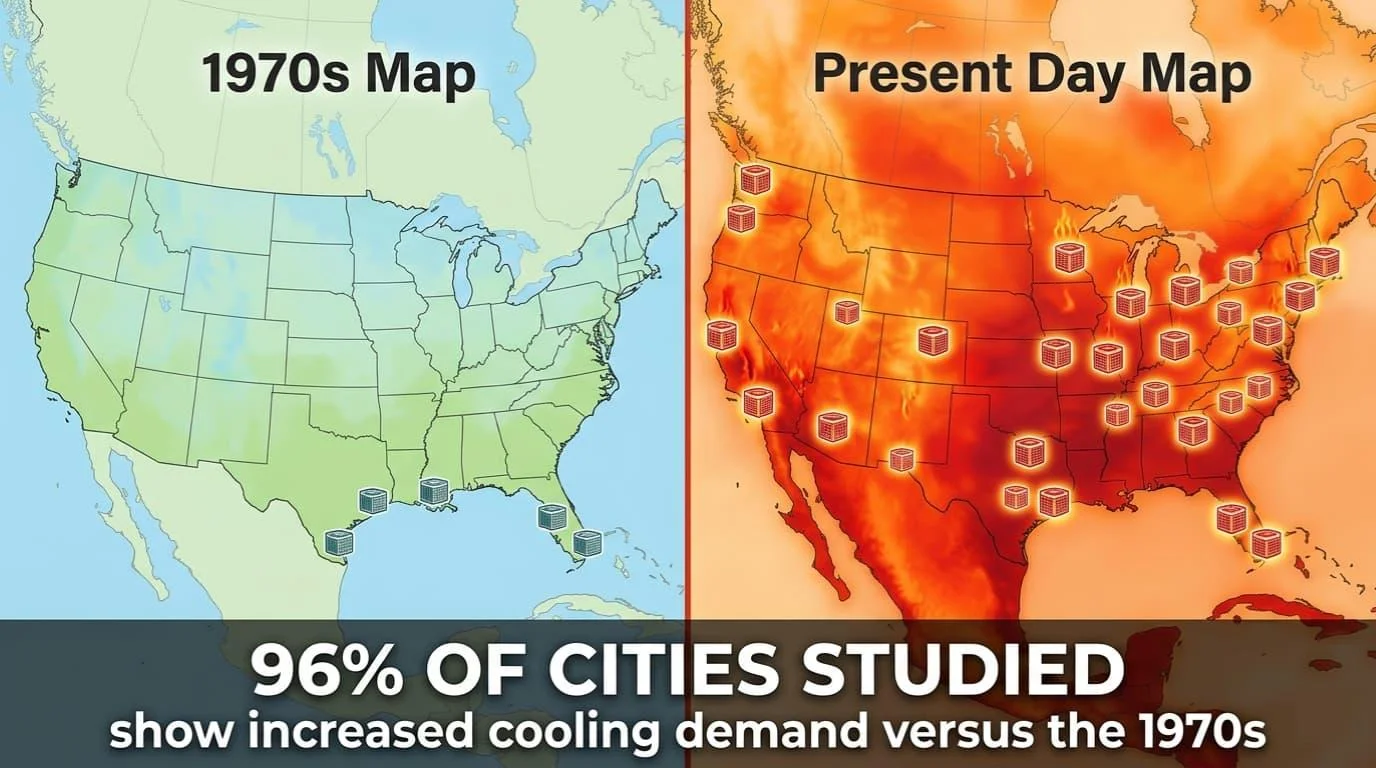
According to climate trend analyses comparing historical temperature patterns, nearly all major U.S. cities now require more cooling than they did several decades ago. The finding that 96% of analyzed cities need more cooling than in the 1970s is some of the most compelling evidence of a widespread climate shift. This includes northern cities like Minneapolis, Seattle, and Boston, where the historical need for AC was minimal.
The implications are profound. Infrastructure and consumer behavior designed for a previous climate era are now obsolete. Homeowners in these regions are installing AC for the first time, or running existing units for many more weeks of the year. This also increases peak demand on regional grids during summer heat waves, as millions of additional units kick on simultaneously in places where the grid was not designed for such loads.
Why HVAC employment is projected to grow +6%
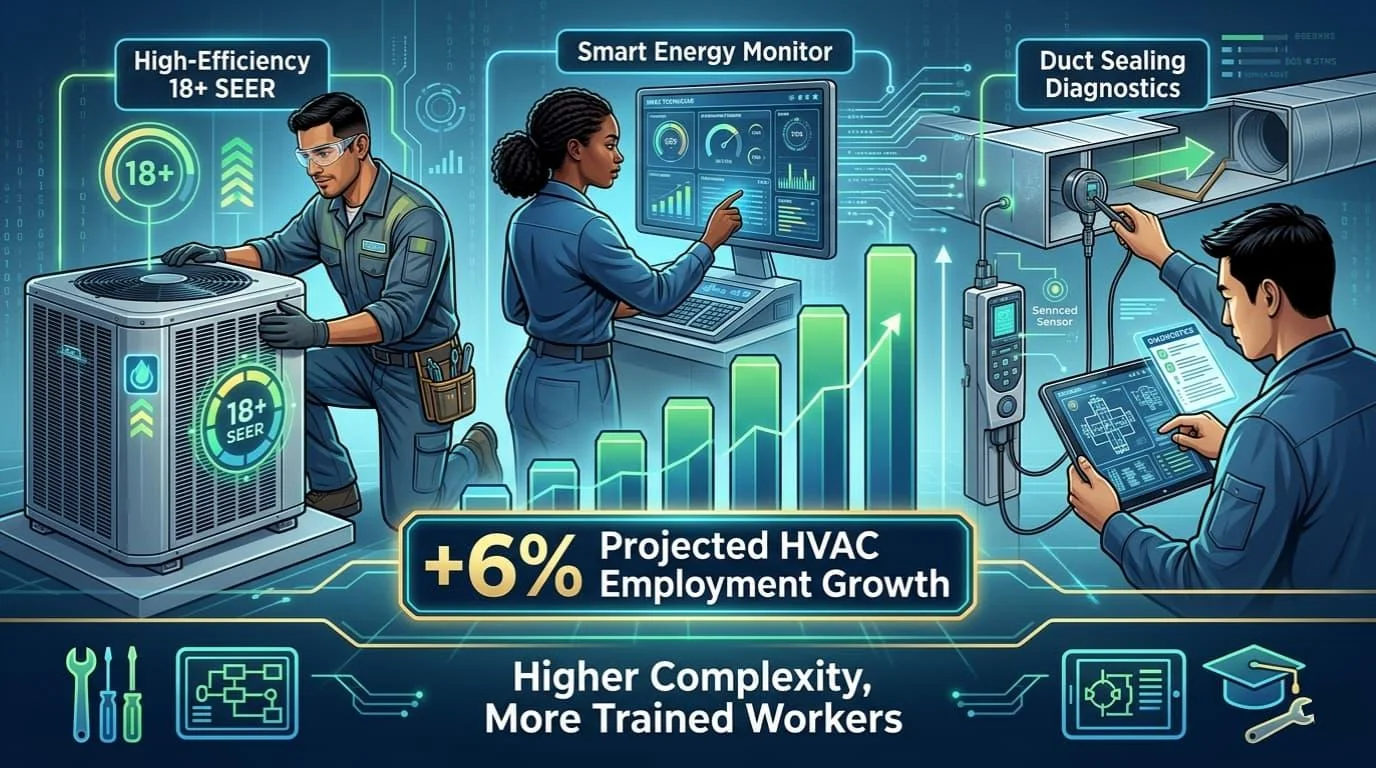
According to U.S. labor and trade projections (Bureau of Labor Statistics), the +6% projected growth in HVAC employment is a direct response to the trends above. This growth is faster than the average for all jobs, showing a strong and lasting need for skilled technicians.
- High volume of installations. The large number of new systems and replacements requires more installers.
- System complexity. Modern high-efficiency and smart systems need more trained technicians for correct setup and maintenance.
- Retrofit and upgrade work. Jobs like adding smart thermostats or fixing ductwork create service work beyond simple replacements.
- Emergency repair spikes. Heat waves cause a surge in emergency repairs, forcing companies to hire more technicians for the seasonal rush.
This growth shows the HVAC industry becoming a larger and more permanent part of the national economy.
Why global cooling demand could triple by 2050
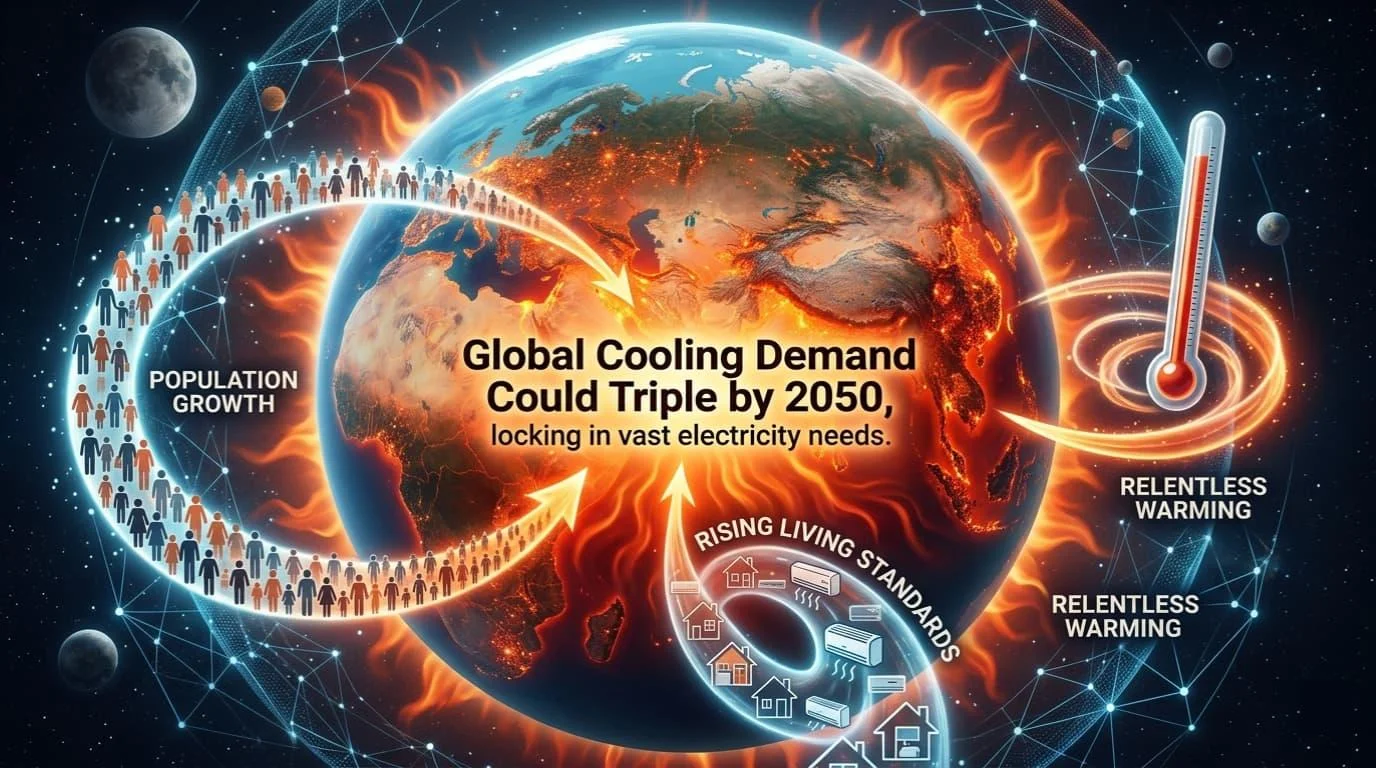
According to the International Energy Agency (via UNEP), global cooling demand could triple by 2050, framing the issue on a planetary scale. This growth is a function of population increase, economic development lifting billions into the middle class, and continued warming. The majority of new demand will come from emerging economies in Asia, Africa, and Latin America.
If this demand is met primarily with conventional, inefficient AC technology, the consequences are severe. It would lock in enormous additional electricity generation needs, often from fossil fuels, and place impossible strains on developing grid infrastructures. The challenge, therefore, is not just to meet cooling demand, but to meet it with hyper-efficient technologies to avoid a self-reinforcing cycle of greater energy use and greater warming.
How homeowners can prepare for rising cooling costs
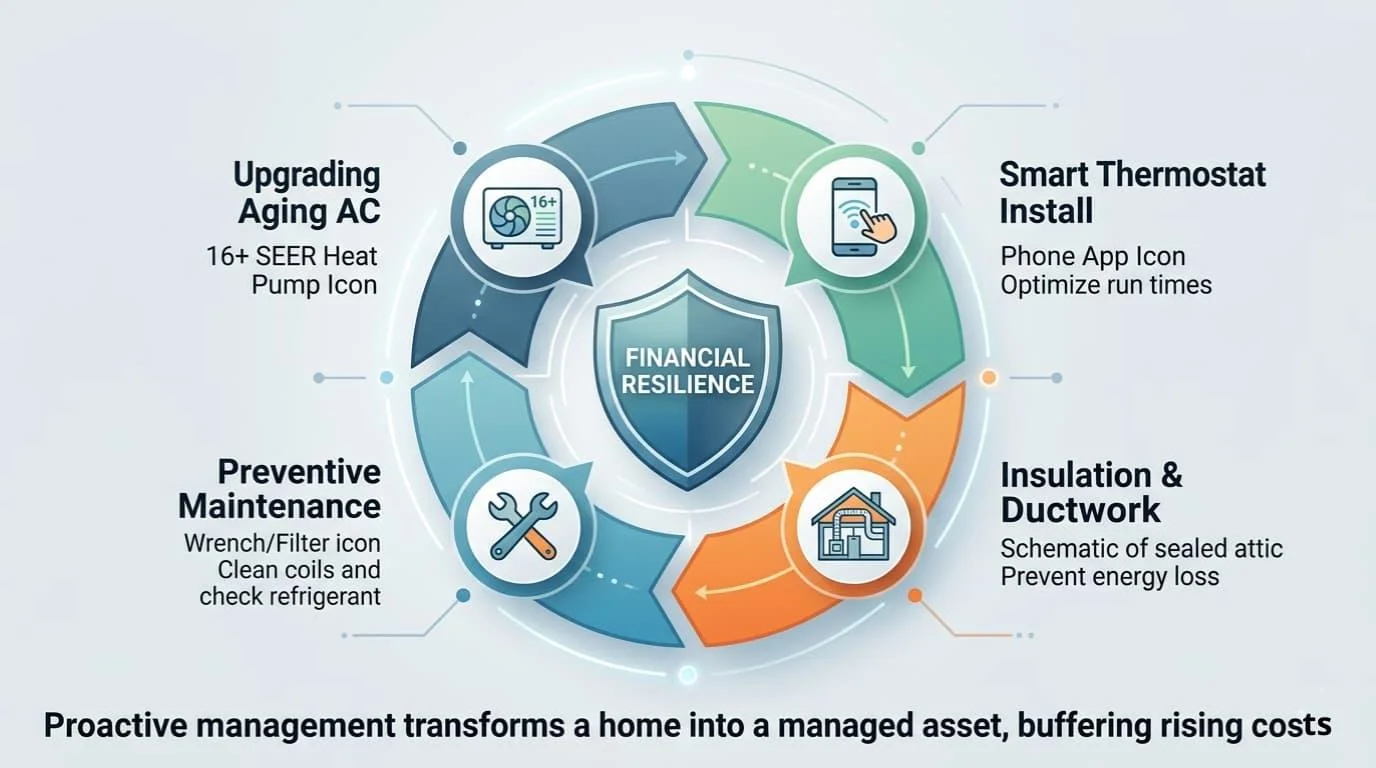
For homeowners in Wesley Chapel, the data points to an inevitable conclusion: proactive management of home cooling systems is a financial necessity. Waiting for a catastrophic failure during a heat wave is the most expensive and stressful option.
- Upgrade before failure. Replace an aging system with a high-efficiency model (16+ SEER2 heat pump or AC) to lock in lower operating costs for up to 15 years.
- Seal the envelope. Make sure attic insulation is adequate and ductwork is sealed so cooled air does not escape.
- Use smart controls. Install a smart thermostat to optimize run times and potentially join utility programs for bill credits.
- Commit to maintenance. Schedule annual service to clean coils, check refrigerant, and replace filters to preserve efficiency and lifespan.
These steps transform a home from a passive victim of rising costs into a managed asset.
FAQ
How can I reduce energy bills after installing residential air conditioning?
You can reduce energy bills by using a smart thermostat, sealing air leaks, and improving attic insulation. Energy-efficient inverter air conditioners also lower electricity consumption during summer heat. Regular preventive maintenance, including cleaning air filters and condenser coils, helps the system operate efficiently while lowering cooling expenses and reducing pressure on the power grid.
What size AC unit works best for residential air conditioning?
The correct AC unit size depends on your home's square footage, insulation quality, ceiling height, and local climate. Oversized systems waste energy, while undersized systems struggle during a heat wave. Professional installers evaluate cooling requirements, airflow patterns, and any duct redesign needs to improve efficiency, indoor comfort, and performance.
How does residential air conditioning affect the electricity grid?
Residential air conditioning increases electricity demand and peak power demand during periods of extreme heat. Higher demand places additional stress on the grid, power lines, and generation. Utilities monitor demand patterns to reduce risk, and demand-flexibility programs and smart controls help balance generation and support stable energy systems.
What maintenance helps residential air conditioning last longer?
Preventive maintenance helps residential AC systems run efficiently and last longer. Homeowners should replace air filters regularly and schedule professional service. Technicians check refrigerant, condenser coils, fan motors, and airflow restrictions. Proper maintenance lowers utility costs, reduces energy usage, and helps the system perform through Florida's long cooling season.
Are heat pumps better than traditional air conditioning systems?
Heat pumps provide both cooling and heating, making them suitable for year-round comfort. Many modern heat pumps use energy-efficient technologies that reduce electricity consumption. Compared with older AC systems, they often improve efficiency and lower utility costs. Performance depends on climate, insulation quality, and professional installation.
Cool smarter for the future ahead
The future of home cooling is no longer just about comfort, it is about resilience. As extreme heat intensifies in places like Florida, energy-efficient AC systems have become essential for protecting both household budgets and long-term sustainability.
Delaying upgrades may cost more than higher utility bills. Older systems strain energy use, reduce reliability, and make extreme heat harder to manage. Efficient systems create comfort without unnecessary waste.
Upgrading to an energy-efficient cooling system can help lower utility costs, improve indoor comfort, and prepare your home for Florida's hotter seasons. Tim and the team at I Care Air Care help Wesley Chapel homeowners choose solutions built for long-term performance and reliability. Call (813) 395-2324 or request a residential AC installation quote to get started.

Tim founded I Care Air Care in 2010 after 30+ years in the Tampa Bay HVAC trade. EPA Universal certified. The source for all technical guidance published on this site.
Read Tim's full profile →Related local help
These pages connect this guide to the services and local areas homeowners usually need next: